Quoted a Contingency Fee? The Base It Gets Multiplied Against Decides What You Keep
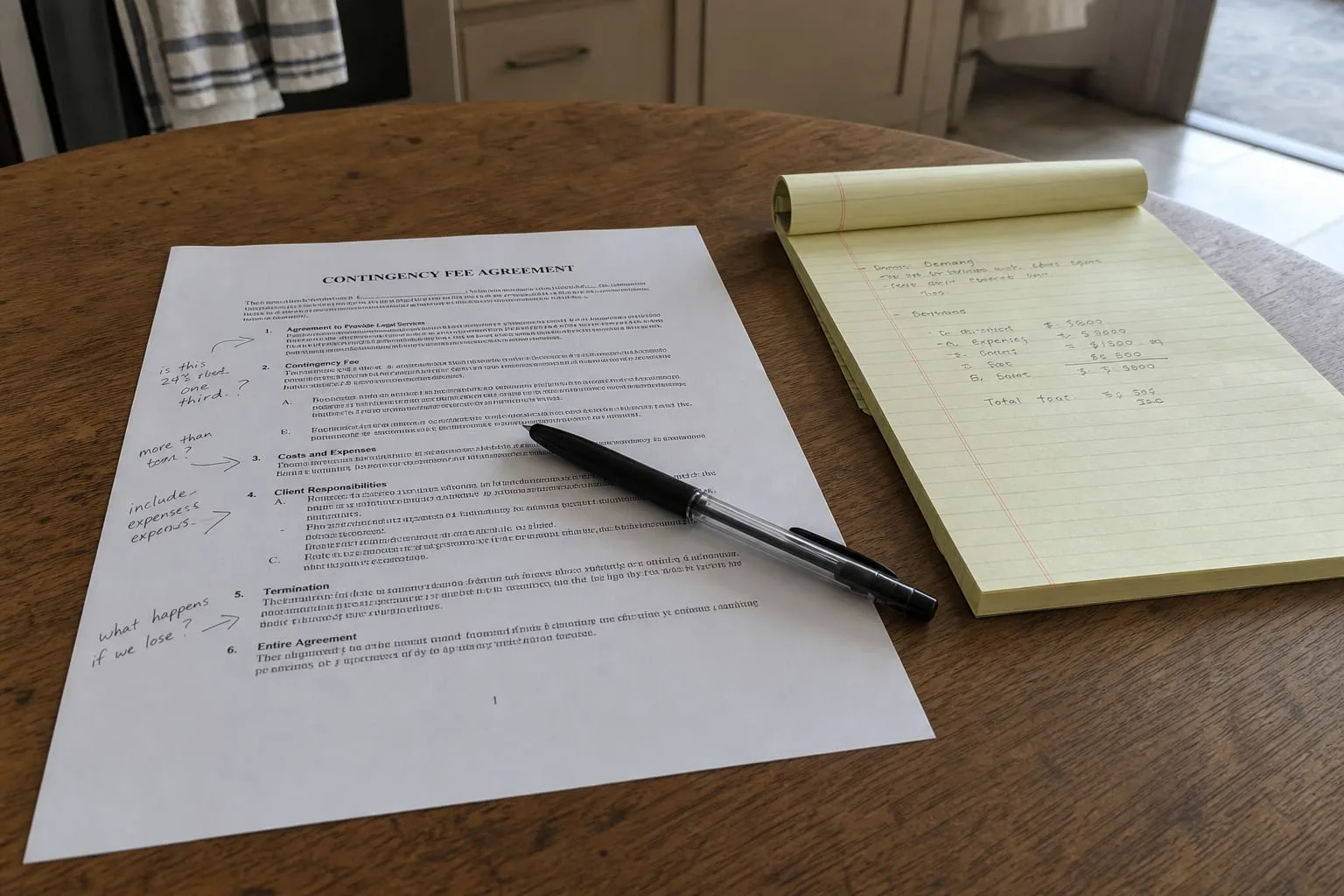
Two firms can quote the same contingency percentage and hand you checks thousands of dollars apart, because the percentage is the least variable part of the deal.
Latest filing
Collection
10 stories filed to the Legal Affairs desk — newest first.

Two firms can quote the same contingency percentage and hand you checks thousands of dollars apart, because the percentage is the least variable part of the deal.
In a civil claim against an institution, the fee percentage matters less than the base it is applied to, and that base is negotiable at signing.
An offer arrives at roughly half of what you asked for. The decision feels like a question about principle. Done properly it is a question about probability and time.

Four separate clocks begin on the day of the storm, none of them announced, and the one most people miss is not the deadline in the insurance policy.
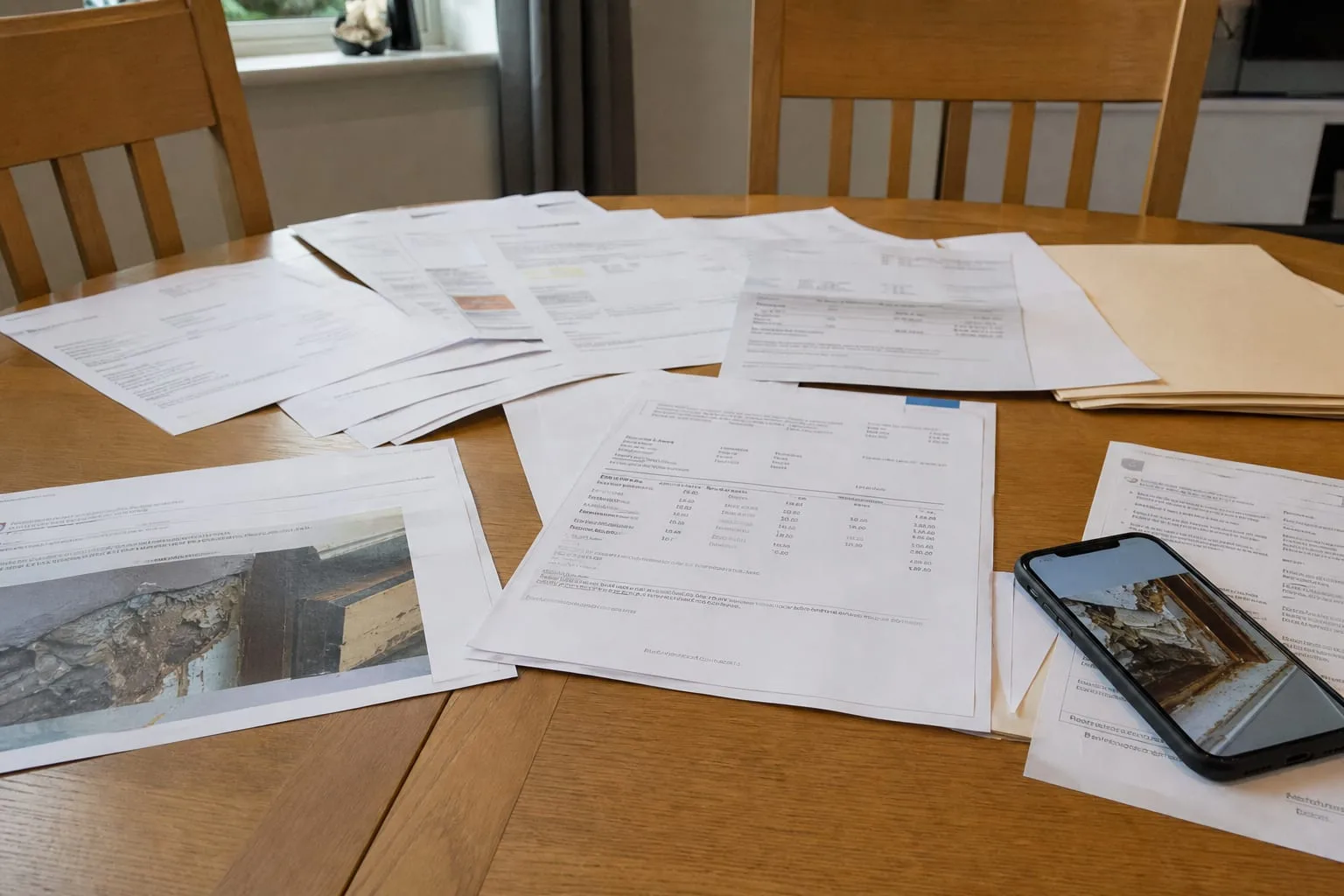
An attorney’s first hour goes either on advising you or on organizing your paperwork. You choose which by what you bring, and the two are priced identically.
A settlement offer arrives with a release attached. The money is the part everyone examines. The release is the part that decides what happens if the problem returns.
Three fee structures, each entirely reasonable, each pointing an attorney’s incentives somewhere different. The problem you have decides which one you want.
People rewrite the letter a fourth time and lose anyway. The letter was never the weak part. The weak part is that nothing in the file carries a date.
A boundary argument between two neighbors ran for eight months. The first three hours of legal time did nearly all of the useful work, and everyone knew it afterward.

Almost every failed complaint fails because the stages were taken out of order, not because the homeowner was wrong about the work itself.