Legal Affairs
Sincerity Is Not Evidence: Why Complaints Are Decided on the File and Not the Letter
People rewrite the letter a fourth time and lose anyway. The letter was never the weak part. The weak part is that nothing in the file carries a date.
- Words
- 1,273
- Written by
- Tobias Renfrew
- Filed
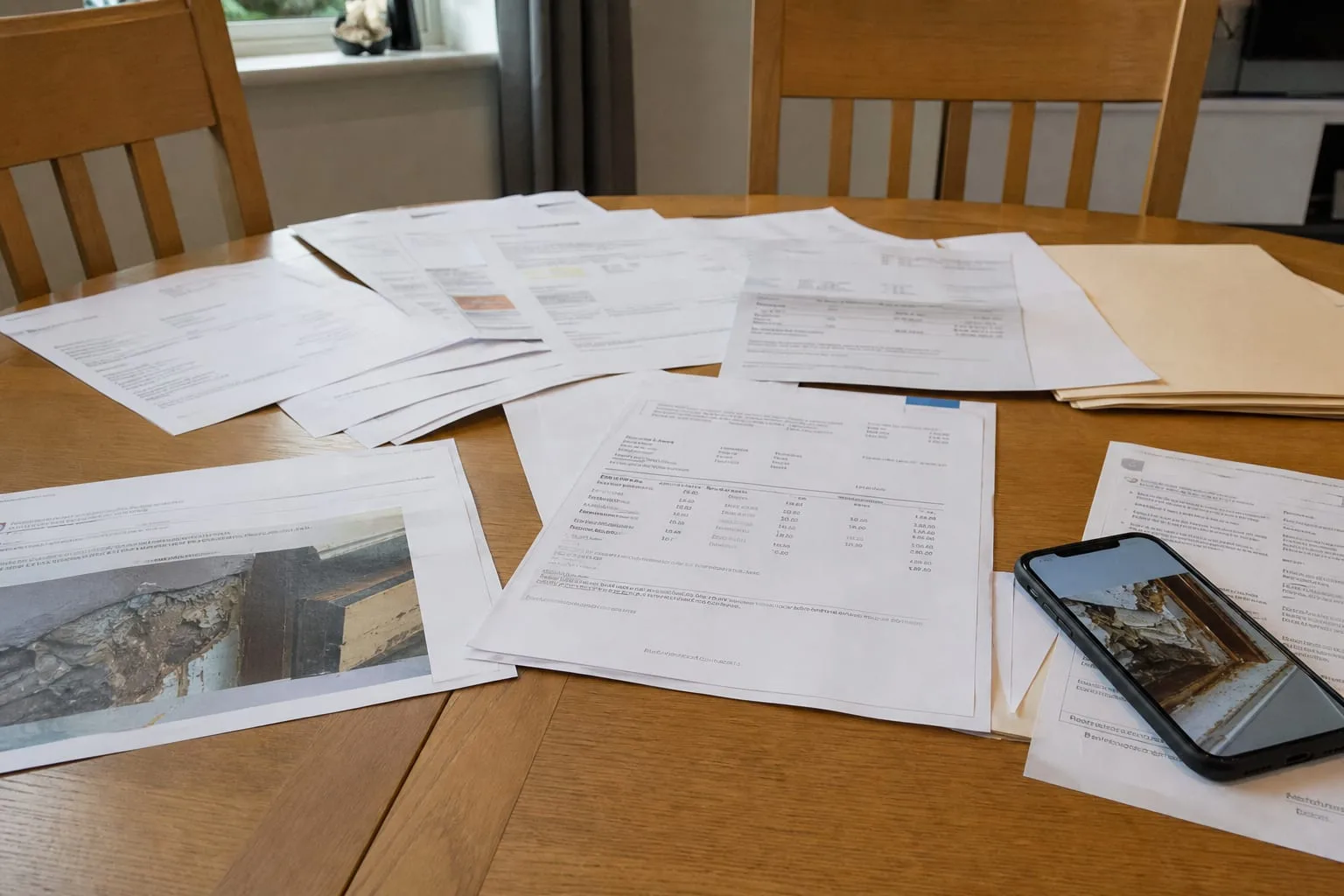
The common belief about complaints is that they turn on how well the case is put, which is why people rewrite the same letter four times and lose anyway. Complaints do not fail because the complainant was insufficiently articulate. They fail because there is nothing to look at. The person who prevails is not the better writer but the one who can produce a dated document for each thing they are asserting. That is unwelcome advice, since rewriting a letter feels like progress and costs nothing while building a file is tedious and has to begin before anybody knows it will be needed.
What the Person Deciding Is Actually Doing
Whoever reads your complaint, whether that is a store manager, a card issuer, a licensing board or a judge, has exactly one problem: two accounts of the same events and no way of telling which is true. They are not searching for the more persuasive account, because both accounts are persuasive and were written by people who believe them. They are searching for something that exists independently of either party, and the whole of their job is finding it. Everything else in the file is connective tissue between the pieces that qualify.
A photograph with a date on it. An email with a timestamp. An invoice, an inspection report, a text message containing the sentence you say was said. Those are not decoration on an argument, they are the argument. Understand the reader's problem that way and your effort moves somewhere more useful, because you stop refining adjectives and start asking a harder question of each sentence you have written, which is simply what proves this. Sentences that cannot answer it are the ones costing you the outcome.
The Four Kinds of Evidence, Ranked Honestly
Independent third party records are the strongest thing anybody can hold, meaning a failed municipal inspection, a written report from an engineer or a surveyor, or a second contractor's written assessment of the defect, and they carry weight precisely because their author has no interest in the dispute. The other side's own words come next: a text saying it should be finished Friday, an email agreeing to redo the work, a quote listing the specification that was not met. That is why every phone conversation deserves a short confirming email afterward, which converts their position into a document without any drama.
Contemporaneous records you made sit in the middle, meaning dated photographs, a log written as things happened, receipts kept as they arrived. They are weaker than the first two categories because you made them and stronger than anything else because the date does real work. Your own recollection comes last and is worth far less than people believe, since sincerity is not evidence and two sincere people remembering one conversation differently is the ordinary case rather than the exception. Everybody who decides these matters for a living knows that, which is why the account with attachments wins.
The Records People Believe They Have
A screenshot with no visible date. A photograph of a defect with nothing in the frame to establish where it is or how large it is. A summary of a phone call written from memory three months afterward. A review posted online, which demonstrates that you were angry rather than that you were right. Each of these feels like documentation while it is being gathered and evaporates the moment somebody neutral looks at it, and the discovery usually comes at the stage where there is no time left to fix the gap.
Then there is the category that actively damages a position, which is the long email chain where you lost your temper. It gets read, and it shifts the reader's sense of the parties before they reach any of the facts. If such a thread exists, do not pretend otherwise and do not build the case on it. The most common gap of all, though, is the absence of any record that you gave the other side a chance to put the problem right, because nearly every process asks about that and nearly every complainant assumes it goes without saying.
Every Route Has a Clock Running on It
Card disputes run from a date connected to the transaction or the expected delivery rather than from the day you finally gave up on the seller. Licensing boards frequently impose a filing window. Statutes of limitation vary by state and by the kind of claim, and a contract claim and a defect claim arising from the same job can run on different ones. The practical effect is that four months of increasingly firm letters can quietly close your strongest option while you are still being entirely reasonable, which is the most common way a well documented complaint becomes unwinnable.
Two things follow from that. Find out the deadline on your strongest route early, before you have decided whether to use it, so you know how much patience you can actually afford to extend. Then put the date in a calendar with a reminder two weeks ahead of it, which stops nothing and protects everything. Evidence decays on its own schedule too: security footage is overwritten within weeks at most premises, staff move on, and text threads disappear with a phone, so anything you might need should be exported to somewhere that is not a device you carry.
When the File Tells You to Settle
Here is the part nobody says out loud. Building the file honestly sometimes tells you that you are going to lose, and that is useful information rather than a defeat. If your evidence amounts to a paragraph of recollection and theirs is a signed change order, the sensible move is to negotiate rather than escalate, which is not surrender but the same calculation the other side is running. It generally produces a better result in December than a process that grinds on until June and finishes exactly where the paperwork always said it would.
A strong file changes the tone of everything you send as well. The most effective complaint letters read as almost bored: here is what was agreed, here is the report, here is what I am asking for, no adjectives anywhere. The strength is visible in the attachments and the recipient's own assessment of their risk does the persuading, which is a far more reliable mechanism than eloquence. That is also why the same letter that fails on Monday can succeed on Friday with nothing changed except what is stapled behind it.
The Three Habits That Build It Before You Need It
Almost nobody starts a job expecting a dispute, which is exactly why almost nobody has the records when one arrives. The fix is not vigilance, which does not survive a busy month, but three small routines that cost nothing on the occasions they turn out to be unnecessary. Confirm conversations by email afterward. Photograph work as it progresses, wide and then close, with a tape measure or a coin in the frame for anything concerning size or spacing. Keep the contract, the estimate and every invoice in one place you can find without looking.
Do those on every job and the one job in twenty that goes wrong is already documented before you knew it needed to be. That is what people are describing, without quite realizing it, when they say somebody is good at complaining. They are not better at arguing and they are rarely angrier. They simply have the file, and by the time anybody neutral is reading it, the file has already answered the only question that reader was ever trying to settle.
Tobias Renfrew
Tobias covers complaints, claims, and the paths open once something has gone wrong.