Personal Finance
Tools, Trucks, Boots and Lunch Are Four Deductions With Four Different Tests
Four categories every trade business claims, two of which are usually fine, one that depends entirely on a detail, and one claimed wrongly more often than not.
- Words
- 1,009
- Written by
- Tobias Renfrew
- Filed
Every trade business claims roughly the same set of expenses, and the confidence with which they get claimed has remarkably little to do with how well they would hold up if anybody looked. Four categories cover most of the argument, and they are not four versions of one rule. Each turns on a different test, one of them is nearly always fine, one depends entirely on a piece of paper, one fails more often than it succeeds, and the last is mostly not a business expense at all despite being claimed constantly.
Tools, Where the Only Question Is Timing
Tools used in the business are deductible and the only real question is when the cost comes off. Small tools and consumables are ordinary expenses in the year they are bought, so a drill, a set of wrenches, a box of blades or a work light attract no argument from anybody. Anything large enough that you will still be using it next year counts as a capital purchase instead, and the default treatment spreads the cost across the years of use rather than taking the whole of it now.
Several provisions allow that cost to be taken immediately, and whether doing so is desirable depends on this year's income against next year's, since a large deduction taken in a low income year is worth less than the same deduction spread across better ones. That is a conversation with a preparer rather than a rule to memorize, and it is one of the few genuinely valuable conversations in a small business year. The record keeping side is simple: date, item, cost, and keep the invoice somewhere you can find it.
The Truck, Which Turns on One Record
Vehicle expenses are deductible in proportion to business use, and everything turns on how that proportion gets established rather than on what the proportion is. The detail deciding it is the log. A vehicle claimed at a high business percentage with no contemporaneous record is among the most commonly adjusted items in small business examinations, and reconstructing a year of mileage after the fact produces a document that looks exactly like what it is.
A dedicated work vehicle that leaves the yard only for jobs is the easiest case, and certain vehicles obviously unsuitable for personal use are treated more simply. A pickup that also collects groceries is a mixed use vehicle and mixed use vehicles need the log, without exception and without a shortcut. The separate choice between the standard mileage rate and actual expenses is made per vehicle, with heavy trucks carrying high running costs usually doing better on actual expenses, and both methods requiring the same mileage record underneath.
Boots and Clothing, Where Most Claims Fail
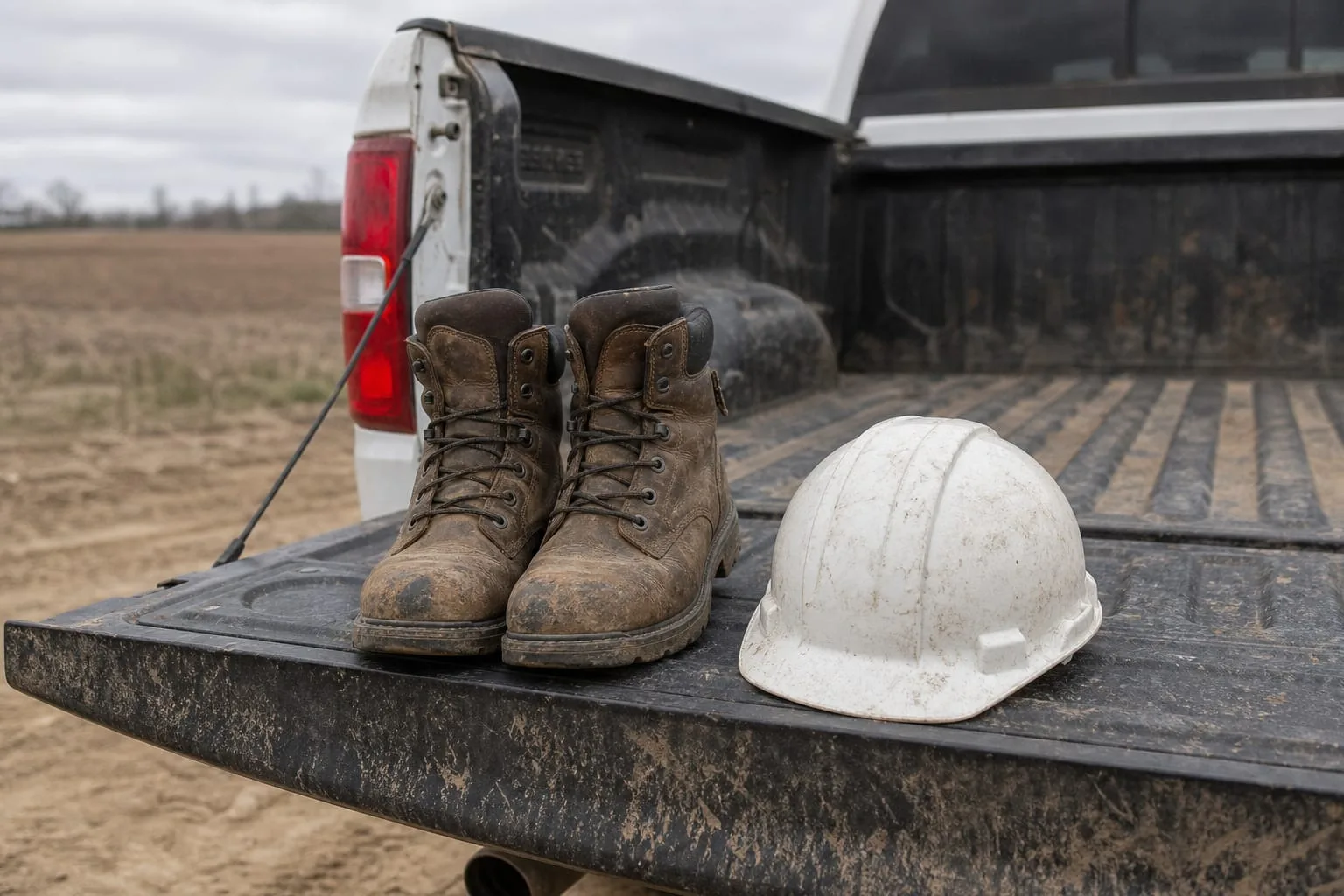
This is the category claimed wrongly most often and the rule is blunter than people expect, since a claim needs two conditions rather than one. The work has to require the clothing, and the clothing has to be unwearable in ordinary life. Steel toed boots, flame resistant coveralls, a hard hat, high visibility gear and cut resistant gloves all qualify comfortably, because nobody wears any of them anywhere except on a job site.
Ordinary work clothes do not qualify regardless of how they are used, so jeans and a plain shirt worn only on site remain suitable for everyday wear, and the fact that you personally would not wear them elsewhere is not the test. The test is objective and it is applied that way. Branded clothing sits between the two and depends on specifics, with shirts carrying the company name frequently accepted where they genuinely are not worn otherwise. Laundering and maintaining qualifying protective gear is generally deductible alongside the gear, which people miss in the other direction.
Lunch, Which Is Mostly Not Deductible
Feeding yourself while working is a personal expense, which is the starting point and disposes of most of what gets claimed here. Meals become deductible in three defined circumstances. A meal with a client or supplier where business is genuinely discussed is deductible at a percentage, with the person and the purpose recorded. Meals while traveling away from your tax home overnight fall under the travel rules, and food provided for employees at the workplace has its own treatment entirely. A sandwich bought at a gas station on the way to a job is none of those. It is lunch, and you would have eaten lunch regardless of where the work was.
The record keeping for the cases that do qualify is heavier than for anything else on this list, since a receipt on its own is not sufficient and the requirement is for who, where and why alongside it. That is one of the few categories where the substantiation expected is specified rather than general, which is a fair signal about how often it gets stretched. Writing three words on the back of the receipt in the parking lot is the whole of the compliance burden, and it is the step that separates a defensible claim from a hopeful one.
What Gets Missed in the Other Direction
Since most of the above is about restraint, it is worth naming what trades routinely under-claim. Continuing education and license renewals, which maintain a skill you already have and are generally deductible. Trade association dues and subscriptions. And the phone, where a proportion of a personal plan used substantially for business is a legitimate claim that almost nobody bothers to work out, usually because each month feels too small to be worth recording anywhere.
Every one of these categories resolves to the same underlying question, which is whether the cost is ordinary and necessary for the business and genuinely business rather than personal. That is the standard applied when a return is examined, and the published guidance the Internal Revenue Service puts out settles far more of these arguments than most people expect it to. Where a category is clear, claim it confidently and keep the invoice. Where it depends on a detail, keep the detail, because the detail is the claim.
Tobias Renfrew
Tobias covers complaints, claims, and the paths open once something has gone wrong.