Homes
Who Actually Installs Your Windows, and Why That Decides What You Save
The glass is rarely the problem in a double glazing dispute. The crew that sets it, and the warranty that follows them, decides what the job is worth.
- Words
- 1,106
- Written by
- Tobias Renfrew
- Filed
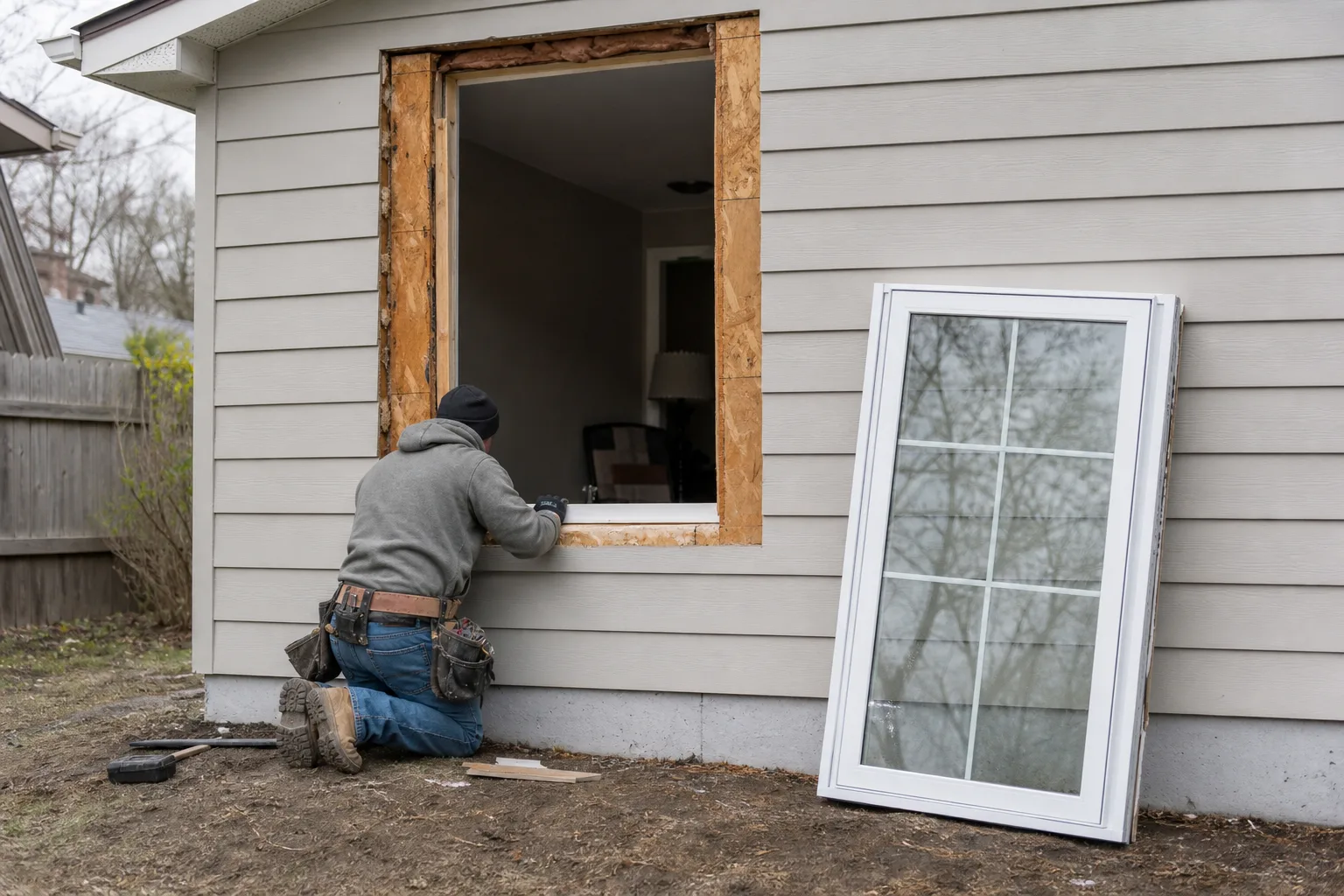
The sales appointment is about glass. Two panes, argon fill, a low-emissivity coating, a number on a sticker. The appointment almost never covers the part that determines whether any of that performs: the three or four people who will arrive in an unmarked van, pull your old windows out, and have the new ones in by mid-afternoon. Most buyers never learn their names before the day of the job. When something goes wrong eighteen months later, those names turn out to be the whole dispute.
What the savings come from, and what they don't
A double-glazed unit reduces heat moving through the center of the glass. That is a real and measurable improvement over a single pane, and it is the part the manufacturer controls. The U-factor and solar heat gain coefficient printed on the label describe the window as a tested assembly, in a lab, installed correctly.
Here is what that number does not include. It does not include the gap between the window frame and the rough opening in your wall. It does not include whether that gap was filled with low-expansion foam or stuffed with fiberglass batt and covered over. It does not include whether the sill pan was installed, whether the flashing laps the right way, or whether the unit was shimmed square so the sashes close against the weatherstripping along their full length.
Air leakage at the perimeter is not a rounding error against the glass performance. On a poorly sealed installation it can be the dominant path. The Department of Energy maintains the testing and labeling framework that makes window performance comparable across brands, which is exactly why the label is silent about your particular wall. Two identical windows, same label, same house, can perform very differently depending on the four hours of work that put them in.
There is a second thing double glazing is sold on and does less reliably: noise. A standard insulated unit with two panes of the same thickness and a narrow airspace does modestly better than single glazing on traffic noise and not much at all on low-frequency sound. Laminated glass, or two panes of different thickness, does considerably more. If quiet is the reason you are buying, that is a specification conversation, and it belongs in the contract rather than in a verbal assurance at the kitchen table.
The party in the transaction nobody negotiates with
Most retail window companies do not employ their installers. They sell, they measure, and they subcontract the labor to a crew paid per opening. That arrangement is legal, common, and not in itself a problem. It becomes a problem when nobody tells you it exists, because it changes who you are dealing with when the work is defective.
A crew paid per opening has a rational incentive to finish openings. The steps most likely to be skipped under that incentive are the invisible ones: the sill pan, the backer rod behind the exterior sealant, the shimming at the hinge side, the interior air seal before the trim goes back on. None of those are visible at final walkthrough. All of them show up later as a draft, a stained sill, or a sash that binds in February.
Three questions put this on the record before you sign:
- Are the installers employees of the company on this contract, or subcontractors? Ask for the answer in writing.
- Who holds the license and the general liability and workers' compensation coverage for the people on my property? Ask for current certificates naming the actual installing entity.
- If the installation fails, who do I call, and does the contract say that company is responsible for subcontractor work?
A reputable seller answers all three without hesitation, and many answer the third with a clear statement that they stand behind the labor regardless of who performed it. That sentence, in the contract, is worth more than another pane of glass.
Two warranties, two defendants
Nearly every window purchase carries two separate promises, and buyers routinely treat them as one.
| Failure | Whose warranty | Typical term |
|---|---|---|
| Fogging or condensation between the panes (seal failure) | Manufacturer | Long, often measured in decades, frequently prorated |
| Frame defect, hardware failure | Manufacturer | Varies by component |
| Draft at the perimeter, water intrusion, racked or out-of-square unit | Installer | Short, commonly one to a few years |
| Damaged siding, trim, or interior finish during the swap | Installer, or their liability policy | Immediate, and shrinking with delay |
The long warranty is the one in the brochure. The short one is the one you will actually need. Ask whether the labor warranty is transferable if you sell, whether it covers removal and reinstallation when a manufacturer defect is found, and what happens to it if the installing subcontractor stops working with the seller. The good contracts answer that last question plainly: the seller remains the responsible party.
Insert or full-frame, and what each one is hiding
| Insert (pocket) replacement | Full-frame replacement | |
|---|---|---|
| What is removed | Sashes only; existing frame stays | Frame, trim, down to the rough opening |
| Glass area | Reduced, sometimes noticeably | Preserved |
| Hidden rot or water damage | Stays hidden | Found and addressed |
| Perimeter air sealing and flashing | Limited to what the old frame allows | Fully renewed |
| Cost and disruption | Lower | Higher |
Insert replacement is a legitimate method when the existing frame is sound, square, and dry. It is also the method a crew reaches for when it is faster, and the one that lets a soft sill continue quietly rotting behind new vinyl. A good contractor inspects and tells you which frames qualify, opening by opening, and a mixed job of inserts and full-frame units on the same house is a sign that someone actually looked.
What to get in writing before the deposit clears
Put the performance numbers in the contract by opening, not as a brand name. Specify the installation method per window. Require the sill pan and flashing detail in writing. Name the labor warranty term and the party who honors it. Get the certificates of insurance for the installing entity. And hold a meaningful portion of the price until after a walkthrough that includes you operating every sash and lock.
None of that is adversarial. It is the same information a competent seller already has on file, and asking for it tends to produce a better crew on the day, because the office now knows you are reading. The households that get the full value out of double glazing are rarely the ones who bought the most expensive glass. They are the ones who understood, before the van arrived, exactly who was going to do the work and who would answer for it.
Tobias Renfrew
Tobias covers complaints, claims, and the paths open once something has gone wrong.