Homes
Storm Damage, Five Checks Before the Repair Starts, and the Party Holding Your Check
Wind claims turn on edge details, scope lines and permits, but the mortgage servicer's loss draft department often decides when the money actually moves.
- Words
- 1,237
- Written by
- Tobias Renfrew
- Filed
A wind claim usually pays twice. Once on paper, when the carrier issues a scope and a number, and once in practice, when the work either holds up through the next front or starts lifting at the same corner it lifted before. The gap between those two moments is where most of the money is lost, and it is rarely lost to fraud. It is lost to a scope that was accepted too fast, a crew that met the minimum, and a third party nobody at the kitchen table remembered was involved.
Here is what to check, in roughly the order it matters.
1. Start at the edges, not the field
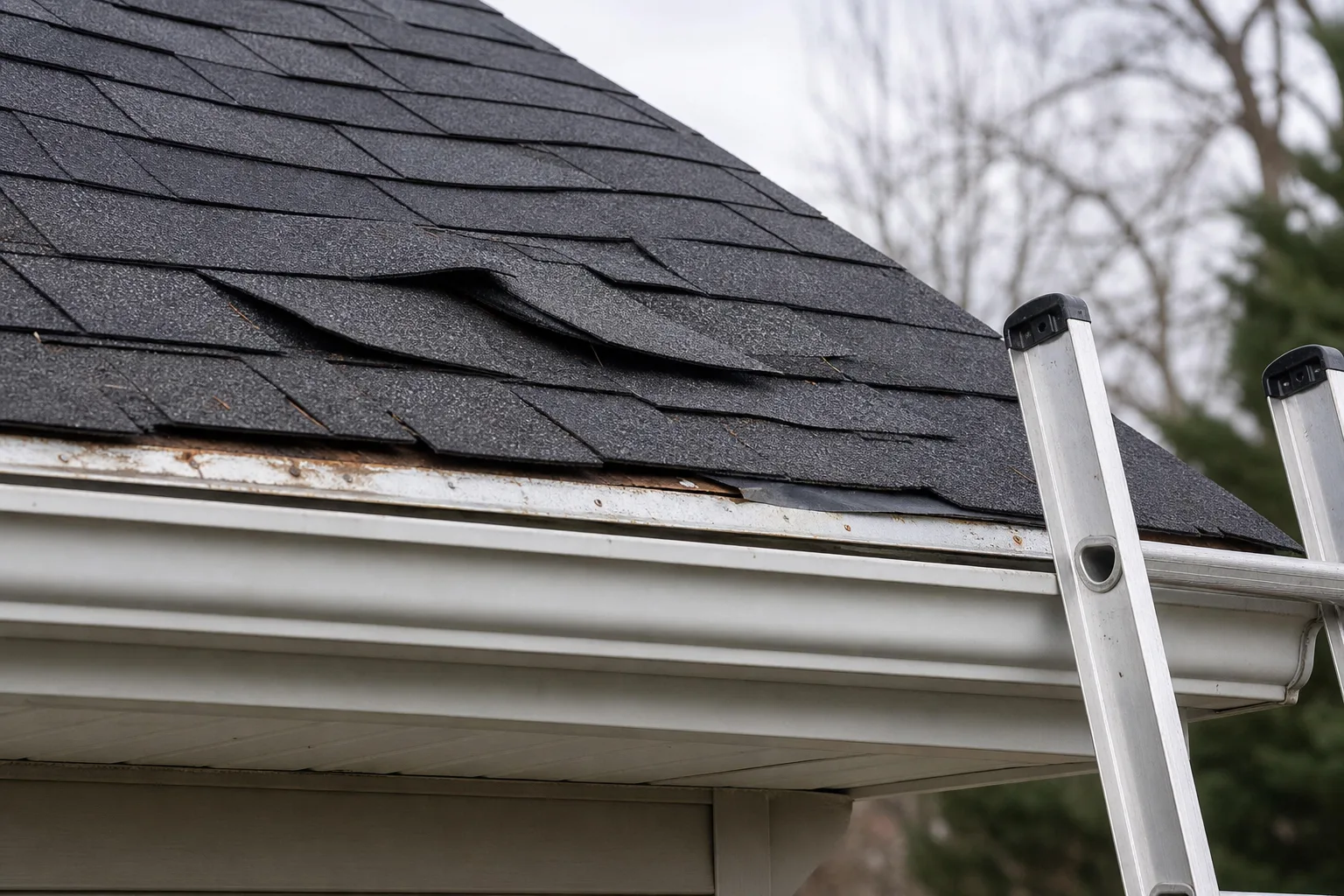
Wind does not pry up the middle of a roof. It catches an edge, gets underneath, and works inward. So the first thing worth examining after a storm is the perimeter: the rake, the eave, the ridge, and anything that penetrates the plane. On a coastal property that means looking hard at the drip edge and the starter course, because a starter strip that was reversed or short-nailed on the original install will fail in a 50 mph gust and then be blamed on the storm.
A barely adequate repair replaces the shingles that are visibly gone. A good one pulls back a course or two beyond the damage, checks whether the underlayment is torn, and replaces the starter and the metal at the edge even though the homeowner will never see it. Ask the contractor what he intends to do at the eave specifically. If the answer is vague, the number on the estimate is not covering it.
2. Read the scope line by line before anyone agrees to it
The carrier's estimate is a line-item document, and each line carries a quantity. Squares of shingle, linear feet of ridge, linear feet of flashing, sheets of decking. The dispute, when there is one, is almost always about quantity rather than price.
Two things to look for. First, whether the estimate covers a repair or a slope. A patch in the middle of a weathered roof field is an invitation to a mismatch and a seam that leaks in two years. Second, whether decking is in the scope at all. Adjusters frequently write zero sheets of decking because they cannot see what is under the shingles from a ladder, and the contractor finds rot once the tear-off starts. That is not a surprise, it is a predictable supplement, and a competent contractor documents it with photographs on the day and submits it before the new material goes down. After the fact, it is a much harder conversation.
Keep the carrier's estimate and the contractor's estimate side by side and compare quantities, not totals. A contractor advertising roof repair in long beach who will walk you through the line items and explain where his number differs from the adjuster's is telling you he has done this before.
3. Find out what the building department requires, before the tear-off
Insurance pays to restore what was there. Local code may not permit what was there. Those are two separate systems and they do not coordinate with each other.
The building official is the first overlooked party in this transaction. Depending on the jurisdiction and the number of existing layers, a permitted re-roof may trigger requirements that did not exist when the original roof was installed: a different underlayment, upgraded fastening, specific ventilation, or a limit on roofing over. Those upgrades cost money, and whether the carrier pays for them depends entirely on whether the policy carries ordinance or law coverage. Many do, in a limited amount. Some do not.
Check the declarations page for that coverage before work starts, and ask the contractor to pull the permit in his own name. A permitted job generates an inspection record, and that record is the cleanest evidence you will ever have that the work met the standard in force on the date it was done. It costs almost nothing and it settles arguments years later when the house sells.
4. The manufacturer has rules, and they are not advisory
Shingle and tile manufacturers publish installation instructions that specify fastener count, fastener placement, underlayment type, and the conditions under which a high-wind rating applies. A six-nail pattern in the correct nailing zone is not the same product as a four-nail pattern driven high. The material warranty assumes the published method was followed.
This matters after the next storm, not this one. If the roof fails again and the manufacturer's representative inspects it, improper fastening is the first thing found and the fastest way to a denied warranty claim. The carrier, meanwhile, may take the position that the second loss was caused by defective workmanship rather than wind, which is an exclusion in most policies.
So ask two questions. Which product, exactly, by name and line. And what fastening pattern will be used. Then ask for the manufacturer's installation document, which is free and public, and confirm the answers match. A good crew volunteers this. It is also worth asking whether the contractor is certified by that manufacturer, because an enhanced workmanship warranty generally requires it and is registered after the job, not before.
5. The mortgage servicer is a party to this whether you invited it or not
If there is a loan on the house and the claim is above a threshold the servicer sets, the claim check will arrive with the servicer named on it alongside you. It cannot be deposited without endorsement. The servicer's loss draft department then holds the funds and releases them in stages, usually against a signed contract, a W-9 from the contractor, a sworn statement, and inspections at milestones such as fifty percent complete and final.
Homeowners discover this after the check arrives, which is the worst possible time, because the contractor has already scheduled material delivery against a deposit the homeowner no longer controls. The fix is simple and almost always skipped: call the servicer the week the claim is filed, ask for the loss draft requirements in writing, and ask what the inspection threshold and the turnaround time on a release are. Then tell the contractor what the draw schedule will actually look like, before signing anything. Contractors who do storm work routinely will not blink at this. Ones who insist on a large cash deposit up front may not be able to work inside it.
One related boundary worth knowing early: wind and flood are handled separately, and flood coverage is written through a program administered by the Federal Emergency Management Agency rather than under a standard homeowners policy. If water entered from the ground rather than through the roof, that is a different claim, a different adjuster, and a different set of deadlines.
What good looks like in practice
A good job leaves a paper trail: a line-item scope that matches the contract, dated photographs of the deck before it was covered, a pulled permit with a passed final inspection, a named product with a registered warranty, and a servicer file that closed without a disputed release. None of that is visible from the street. All of it is retrievable five years later, which is when it tends to be needed.
Collect the documents while everyone is still being helpful. The week after the storm, every party in this chain will answer the phone. That window is shorter than it feels.
Tobias Renfrew
Tobias covers complaints, claims, and the paths open once something has gone wrong.