Personal Finance
Expecting a Surprise in April? The July Pay Stub Already Contains the Answer
The document arrives twenty-four times a year and gets glanced at for one number. Four other lines on it decide what happens at filing time, and July is when they can still be changed.
- Words
- 898
- Written by
- Grant Weatherby
- Filed
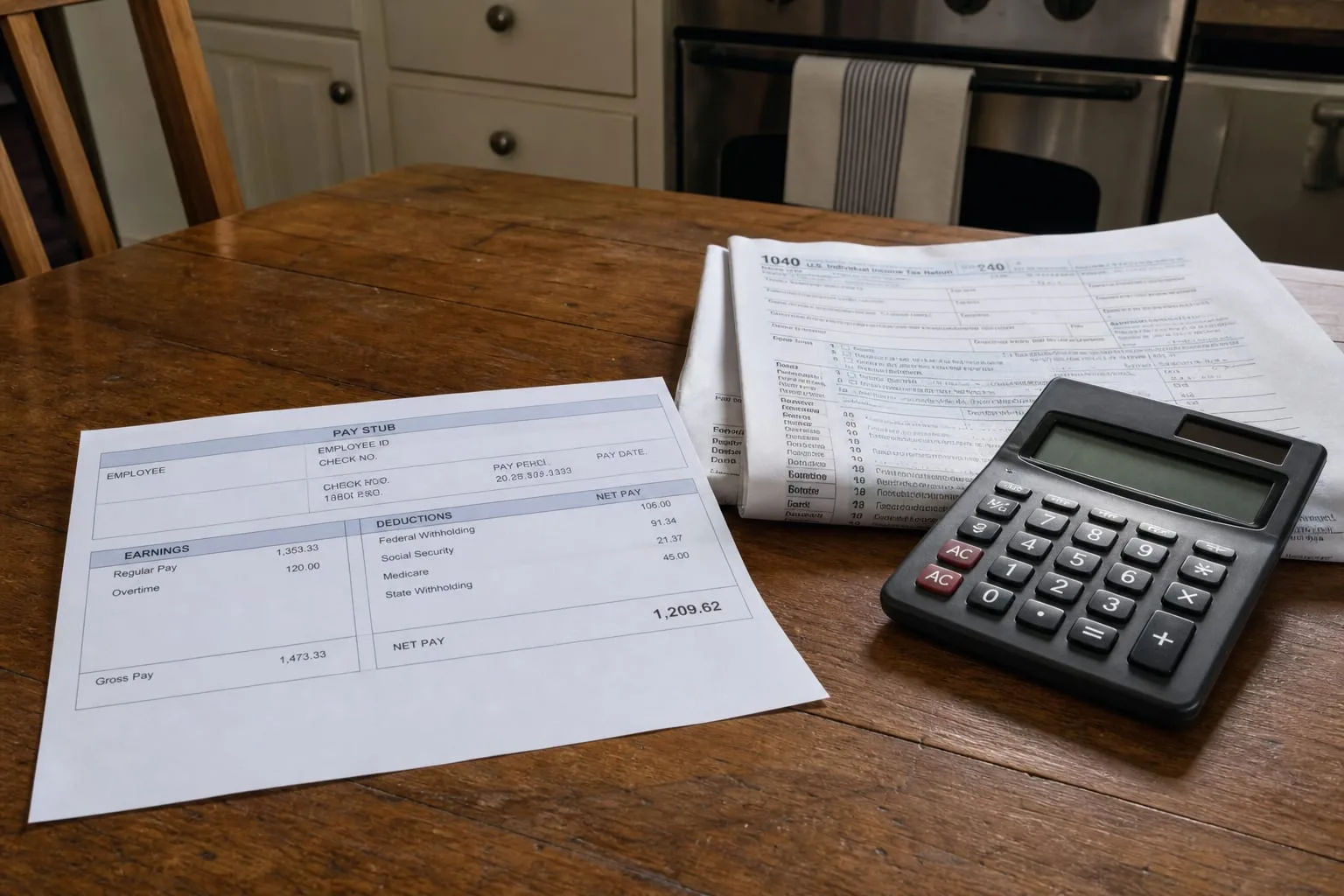
A pay stub is a compliance document rather than a receipt. It exists because employers are required to itemize what was earned, what was withheld and on what basis, which means the one sitting in your inbox right now contains a complete statement of your tax position at the halfway point of the year. July is the right month to read it, because enough of the year sits behind you for the figures to mean something and enough sits ahead for any correction to be gradual rather than painful.
The Four Lines That Matter, All in the Year to Date Column
Ignore the gross and net figures for this exercise entirely, because the information is in the year to date column beside them. Take year to date gross and double it, adjusting for anything you already know about the rest of the year such as a bonus, seasonal overtime or an unpaid stretch, and that is your projected wage income. Then take year to date federal income tax withheld and double it the same way, which is what your employer will have sent in on your behalf by December.
Do the same with the state figure, since states run their own withholding forms and their own defaults and a state number can be wrong while the federal one is perfectly correct. Then find the pre-tax deductions, meaning retirement contributions, health premiums and anything else taken before tax is calculated, because those reduce your taxable wages and are the reason your projected income is not simply your projected gross. Four numbers, two minutes, and no arithmetic more complicated than doubling.
The Comparison Against Last Year's Total Tax
Take last year's return and find the total tax line, which is a specific figure and is not the same thing as your refund or your balance due, since that number is what the year actually cost you rather than what moved in April. Compare it against your projected withholding. Comfortably above, with circumstances broadly unchanged, means you are on course for a refund, and below means a bill whose approximate size the gap already tells you. The comparison is rough and does not need to be better than rough.
Why the Withholding May Be Wrong Through Nobody's Fault
Withholding is calculated from the form on file with each employer, and that form knows only about that employer, which produces shortfalls nobody did anything wrong to cause. Two earners in one household is the classic case: each employer withholds as though its salary were the household's only income, so the combined withholding falls short of the combined liability, and the step on the current form designed to fix that is very frequently left blank because it looks optional.
A second job or self-employment income produces the same effect more sharply, since nothing is withheld on the second stream unless you arrange it and that income stacks on top of the first at a higher rate than your average. A raise, a bonus withheld at a flat supplemental rate, or a change at home such as a marriage, a divorce, a birth or a dependent who no longer qualifies will each move the calculation, and not one of them updates the form on file automatically.
Fixing It in July Rather Than December
The correction is one document: a new withholding form handed to your employer, which can be changed at any time and as often as you like. The most reliable line on it is the one for additional withholding per pay period, which simply adds a flat dollar amount to each paycheck, so if the projection shows a shortfall you divide it by the number of pay periods left in the year and write that figure in. It is arithmetic rather than estimation and it does exactly what it says.
Timing is the whole reason July beats November. A shortfall spread across six months is a modest reduction in each paycheck, while the same shortfall discovered in November has to come out of two. There is a further benefit for anybody with self-employment income, which is that withholding from wages counts as though it came out in equal parts across all four quarters whatever month it actually left, so a larger bite taken late can cover a shortfall from the spring in a way no estimated payment can.
Over-Withholding, and Keeping the Final Stub
The same exercise catches the opposite problem, which is less urgent and still worth fixing. A large refund is money withheld from your paychecks and returned without interest months later, and for some households that is a deliberate savings mechanism nobody should argue with. For anybody carrying a balance on a card at a meaningful rate it is an expensive way to save, and reducing withholding to redirect that money is a straightforward improvement available on the same form.
Then keep the last stub of the year with your tax documents, because it carries the year to date totals for everything and it is what you check the arriving wage statement against in January. Discrepancies are uncommon and they do happen, usually over a benefit or a correction posted after the final pay period, and catching one in January is a phone call to payroll while catching it after filing is an amended return. The difference between those two outcomes is that somebody kept one piece of paper.
Grant Weatherby
Grant writes about what has changed lately and what it means.