Personal Finance
The Safe Harbor Rule: How to Stop Guessing at Quarterly Estimated Tax Payments
The system was built around employers withholding tax from every paycheck. Anyone paid without withholding has to reproduce that by hand, four times a year.
- Words
- 893
- Written by
- Tobias Renfrew
- Filed
The United States runs a pay as you earn system without ever calling it that. Tax is collected throughout the year rather than at the end of it, and an employee never sees the mechanism working, because payroll removes the money and forwards it before the check ever reaches them. Nothing performs that step for a self-employed person, a landlord, a retiree drawing from investments or anybody with substantial income outside a paycheck, and the estimated payment system exists so those households can reproduce the same result by hand.
Why the Timing Matters More Than the Total
This is the part that surprises people, and it surprises them expensively. You can pay every dollar you owe by the filing deadline and still be charged an underpayment penalty, because the system cares about when the money arrived rather than merely that it did. The obligation is assessed quarter by quarter, so paying nothing for three quarters and everything in the fourth generally does not cure the earlier shortfalls, and the charge accrues on each period separately from the date that period's payment fell due.
Understanding the charge as interest rather than as a fine also tells you how to think about the size of it. It is a rate applied to what was outstanding and for how long it stayed outstanding, which means a small shortfall over a short period is a small number and a large one carried across most of a year is not. That framing removes most of the anxiety attached to the subject, because it turns an apparently arbitrary penalty into something with a shape you can predict and plan against.
The Safe Harbor, Which Removes the Guessing
Estimating this year's tax accurately is genuinely difficult with variable income, and the rules acknowledge that through a safe harbor: pay enough during the year and no penalty applies even where you end up owing more at filing. Two routes reach it. Pay at least ninety percent of what this year's tax turns out to be, which requires knowing the future, or pay at least the whole of what last year's tax was, which requires only looking at last year's return and doing one division.
The prior year route is the useful one and it is badly underused. Take last year's total tax, divide by four, pay that on each due date, and the penalty question is settled regardless of how this year develops, with any balance owed at filing carrying no penalty because the harbor was met. Higher income taxpayers are held to a higher percentage of that prior year figure, which is worth checking against your own situation. If this year runs worse than last, the ninety percent route based on actual figures remains available.
The Dates, and the Mechanics
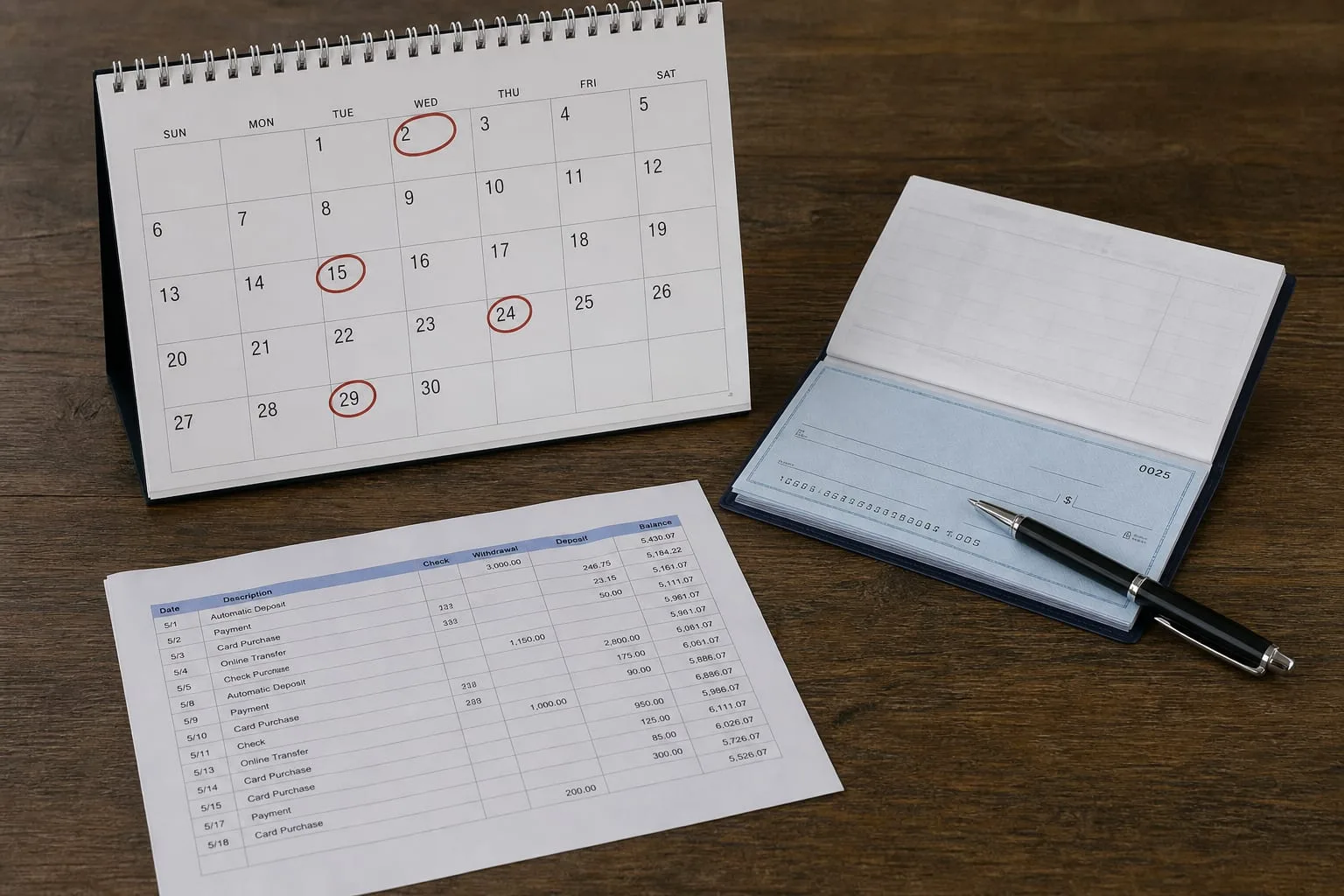
Payments fall due four times a year and the quarters are not equal in length, which catches everybody once. The deadlines land in April, June, September and the following January, covering periods of three months, two months, three months and four months respectively, which is why a diary entry beats intuition. Paying online is straightforward through the systems the Internal Revenue Service operates directly, and most states with an income tax run their own equivalent, with separate deadlines that are forgotten far more often than the federal ones.
The Withholding Shortcut Most People Should Use
There is a shortcut worth knowing about before you set up anything else. Money withheld from a paycheck is credited as though it had arrived in four equal installments across the year, whatever date it actually left, which is a genuinely useful asymmetry. So if you or a spouse has any employment income, increasing withholding late in the year can cover a shortfall from earlier quarters in a way that a fourth quarter estimated payment simply cannot.
A household with one salaried job and one self-employed business can frequently run the entire obligation through the salary's withholding and never make an estimated payment at all, which removes four deadlines from the year and replaces them with one form filed at work. The same treatment applies to withholding on retirement account distributions, which is elective and is likewise treated as paid evenly, making it a useful lever for a retiree whose income arrives in irregular lumps rather than on a schedule.
Making It a Habit Rather Than an Event
The practical version for anybody self-employed is to open a separate account and move a proportion of every payment received into it on the day the money lands. Guess high, since the proportion has to cover income tax and self-employment tax together and that combination is larger than most people's instinct suggests. Then pay each estimate out of that account on the date it falls due, so the payment is never a decision and never competes with a supplier invoice or a payroll run for the same dollars.
Do that and the entire subject becomes administrative rather than stressful. The safe harbor tells you the amount, the separate account holds it, and four dates in a calendar handle the rest without anybody having to forecast a year they cannot see. It is one of the few parts of running a business where a small routine, set up once and then left alone, genuinely removes a recurring problem instead of merely making it more comfortable to live alongside.
Tobias Renfrew
Tobias covers complaints, claims, and the paths open once something has gone wrong.