Education
Missed the Fall Cohort? What a Large Provider's Calendar Adds to the Price of Waiting
Big training providers run on fixed terms, aid years and intake windows, and the month you apply can change both the tuition you pay and the wages you forgo.
- Words
- 928
- Written by
- Grant Weatherby
- Filed
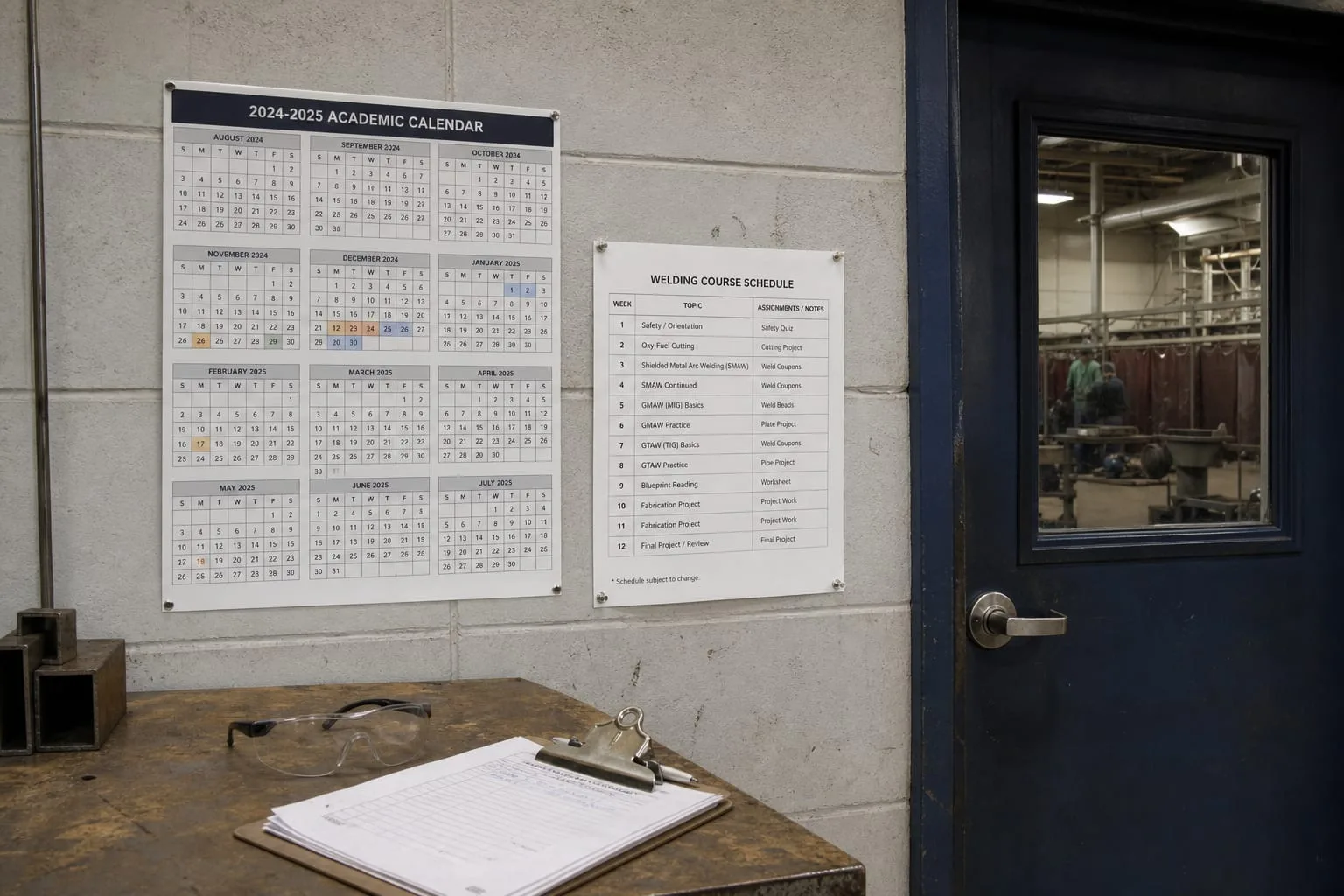
Two people enroll in the same welding certificate at the same community college system, one in August and one in January. Same instructor, same hours, same credential at the end. The January starter pays a different tuition rate, draws from a different federal aid year, and finishes in a month when local shops are not hiring. None of that is in the program brochure. It is in the academic calendar, the fee schedule, and the intake window, three documents that most prospective students never open until they have already committed.
Why the big providers run on a calendar in the first place
The term structure that governs most large training providers was not designed around trades instruction. It was inherited from degree-granting higher education, where accreditation reviews, faculty contracts, state funding formulas and federal aid disbursement all assume a fall and spring rhythm. When community colleges and large private career schools absorbed workforce training over the past few decades, they absorbed that rhythm too. A course that genuinely needs eleven weeks of shop time gets stretched or squeezed into a sixteen-week semester because that is the unit the institution can bill, staff and report on.
That has been loosening. The pressure came from employers who could not wait until September and from students who quit when told to. Larger providers responded with compressed eight-week terms running back to back, multiple start dates in the same semester, and open-entry programs where you begin the week you finish enrolling and progress at your own pace. The practical result is that the same institution now often runs two parallel systems: a traditional calendar for anything that transfers as college credit, and a rolling calendar for the noncredit workforce catalog. Which one your program sits in decides how long you wait.
It is worth asking directly, because the answer is rarely on the program page. Call the workforce or continuing education office rather than main admissions. Ask whether the program has multiple cohort starts per year, whether there is a waitlist, and where you would land on it today.
The windows that genuinely do not move
Registered apprenticeship is the clearest example. Many joint labor-management programs and large sponsors accept applications during a defined period, sometimes a few weeks a year, then rank applicants and work down the list as openings appear. The Department of Labor oversees the registered apprenticeship system and the standards sponsors operate under, and those standards contemplate structured selection procedures rather than continuous hiring. If you find the local sponsor's website in March and the window closed in January, that is not a delay you can negotiate around. It is a year.
Two related timing facts follow from that. First, the ranked list from a single intake often carries forward for a year or more, which means someone who applied at the right moment is ahead of you even if you are better qualified. Second, sponsors frequently tie intake to the construction season, opening applications in winter so that indentures start when work picks up. Knowing which month your local sponsor uses is worth more than any amount of resume polishing.
What a semester of waiting actually costs
Break the cost of a delayed start into four parts, because they move independently.
- Tuition and fee changes. Public institutions typically set rates on a fiscal year that begins July 1. A fall start locks the new rate; a spring start in the same academic year usually locks the same one. Waiting a full year exposes you to whatever the board approves next.
- The aid year. Federal aid is awarded by academic year and the application opens in the fall for the following year. A student who starts in a January term is often drawing the back half of an award year, which changes how much is available for the term after that. Ask the financial aid office to map your intended start against award years before you pick a date.
- Forgone wages. A four-month wait is four months of not earning the post-credential rate. For most short programs this dwarfs the tuition difference.
- Tools and gear. Required kits are often priced by the provider once a year and sold through a single vendor at orientation. Buying early to spread the cost sometimes means buying the wrong revision of the list.
Using the gap instead of losing it
A wait becomes cheaper when it is doing work. Large providers almost always let you take prerequisites, math refreshers, OSHA cards or forklift certifications outside the cohort, on a rolling basis, at a lower cost per hour than the core program. Clearing those in advance shortens the cohort itself in some competency-based formats and, at minimum, reduces the number of things that can knock you out in week three.
Credit for prior learning is the other lever. If you have military training, an out-of-state certificate or documented shop experience, the assessment that converts it into credit takes weeks to process and cannot usually be done retroactively. Start it while you are waiting, not after you enroll.
Seasonal work in the trade you are aiming at also counts twice: it pays, and it gives a sponsor or an admissions committee something concrete to rank you on next cycle.
Pull three dates before you spend anything: the next cohort start, the application window for the sponsor you actually want, and the date the fee schedule resets. Those three numbers tell you what the route costs you this year rather than in the abstract, and they usually point to one clearly better month to begin.
Grant Weatherby
Grant writes about what has changed lately and what it means.