Homes
Turned the Garage Into a Fourth Bedroom? Who Decides Whether That Money Comes Back
A garage conversion is a clean test case for which improvements pay back and which quietly do not, because three separate parties get a vote and only one of them is the buyer.
- Words
- 1,032
- Written by
- Tobias Renfrew
- Filed
Most arguments about home improvement payback are conducted in averages. Kitchens return this much, pools return that much, decks somewhere in between. Averages are useless to a person standing in their own driveway deciding whether to spend money. What is useful is understanding the mechanism: who looks at the work, what they are allowed to count, and what happens when they disagree with you. The fastest way to learn that mechanism is to follow one improvement all the way through to closing.
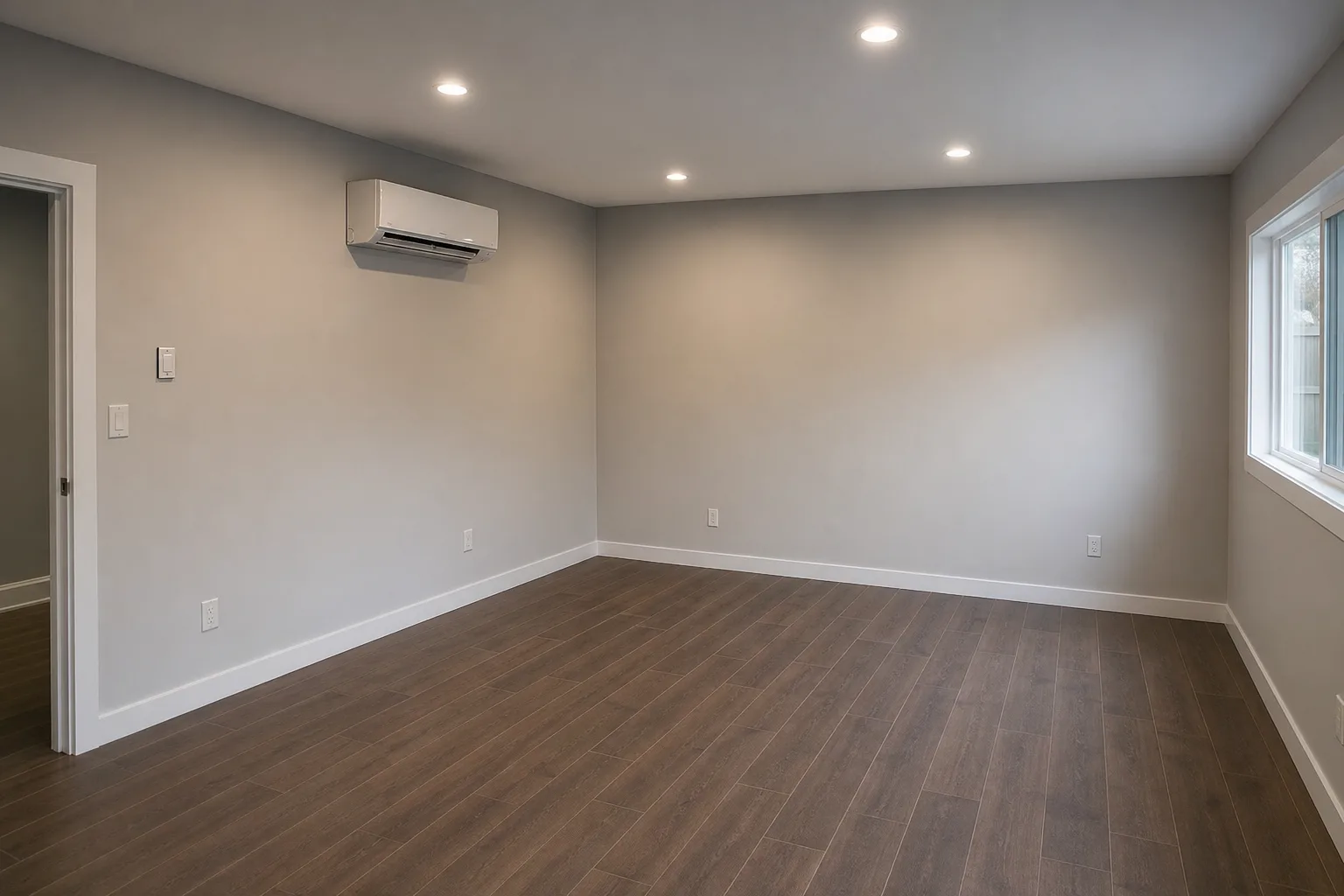
Take a converted garage. A family in a 1990s subdivision needs a fourth bedroom. The attached two-car garage is already dry, already framed, already under the same roofline. They insulate it, run a mini-split, lay flooring, add a closet and a window, and finish the drywall to match the rest of the house. The work is competent. It solves a real problem for four years. Then they list.
Three parties get a vote, and the homeowner is not one of them
The first vote belongs to the permit file. If the conversion was pulled as a permitted finish-out with a final inspection, it exists as a matter of record. If it was not, the county may still show a two-car garage and a three-bedroom house, and the listing that says four bedrooms is now a claim the seller has to defend. Buyers' agents find this. Title does not care, but underwriting sometimes does, and a buyer who learns about it late tends to get nervous about what else was done quietly.
The second vote belongs to the appraiser. Appraisers do not price improvements by what they cost. They price them by what comparable sales show the market paid for the same feature nearby. Converted space is usually only added to gross living area when it is finished to the standard of the rest of the house, heated and cooled by a system the appraiser considers permanent and adequate, and accessible without going outside. A mini-split often clears that bar. A space heater never does. If the conversion fails the test, the square footage sits in the comments section rather than the adjustment grid, which is a polite way of saying it is worth whatever the buyer feels like paying for it.
The third vote belongs to the buyer pool, and in South Texas that vote is less sentimental than people expect. Covered parking matters when the sun is doing what it does in July and hail is doing what it does in spring. A buyer who wanted a three-car household and finds a three-bedroom house with nowhere to put a vehicle is not a buyer. The Consumer Financial Protection Bureau oversees the rules that entitle a mortgage applicant to see the appraisal that is driving their loan, so an informed buyer often has the same document the seller does, and reads it the same way.
The test that separates improvements that pay from improvements that do not
Run three questions in order, before the money leaves the account.
- Does this appear in the comps? Not in a magazine, not in a contractor's portfolio. In recent sales within a mile. If no nearby sale has the feature, there is no evidence of what it adds, and an appraiser has nothing to work with.
- Does it remove something the buyer pool expects? Adding is usually safer than substituting. A fourth bedroom built into a bonus room adds. A fourth bedroom built out of the garage substitutes, and the thing it removes has a price.
- Is it reversible, and at what cost? A conversion that kept the overhead door opening framed, the apron intact and the floor at garage height can be put back for a known number. One that poured a new slab, moved the door opening and re-sided the elevation cannot.
Improvements that reliably return money tend to be the ones that score on all three: they match what neighbors already sold with, they take nothing away, and they are invisible to the question of reversal because nobody wants them reversed. Roof, HVAC, panel, drainage, windows. Dull work. It does not photograph. It does keep a buyer from asking for a credit.
If the work is already done
Decide which of the three votes you can still change. The permit file is often fixable through a retroactive permit and inspection, which costs time and sometimes corrective work but converts a defensible claim into a documented one. The appraisal is addressable by giving the appraiser the permit, the mechanical specs and any comparable sale with a similar conversion rather than hoping they find it. The buyer pool is the one you cannot change, and that is where the real decision sits: either restore the parking before listing, price the house as a three-bedroom with a bonus room, or sell to someone who is buying on numbers instead of on how the house feels. Investors advertising that they we buy houses in schertz tx are generally pricing from repair cost and after-repair value, which means an unpermitted conversion is a line item to them rather than a dealbreaker.
That is a legitimate exit, and it is worth pricing against the alternative rather than treating it as a last resort. Compare three numbers: the as-is offer, the listed price minus the cost of restoring the garage and carrying the house another two months, and the listed price with the conversion disclosed and discounted. One of them will be clearly better. Usually it is obvious within an afternoon.
What the case teaches that the averages do not
Payback is not a property of the improvement. It is a property of the improvement in a specific house, in a specific neighborhood, documented a specific way. The same converted garage pays in a dense older neighborhood where parking on the street is normal and three-bedroom inventory is thin, and loses in a subdivision where every comparable sale has a two-car garage. Nothing about the carpentry changed. The surroundings did.
Build the judgment by doing what the appraiser will do, months early. Pull five recent sales in your subdivision. Look at what they had, what they sold for, and how long they took. Then decide what to spend.
Tobias Renfrew
Tobias covers complaints, claims, and the paths open once something has gone wrong.