Homes
First Storm Claim? Three People Will Look at Your Roof and Only One Writes the Check
A carrier's adjuster, a roofing contractor and a public adjuster all inspect the same storm damage and reach different numbers. Here is how to read each one.
- Words
- 965
- Written by
- Tobias Renfrew
- Filed
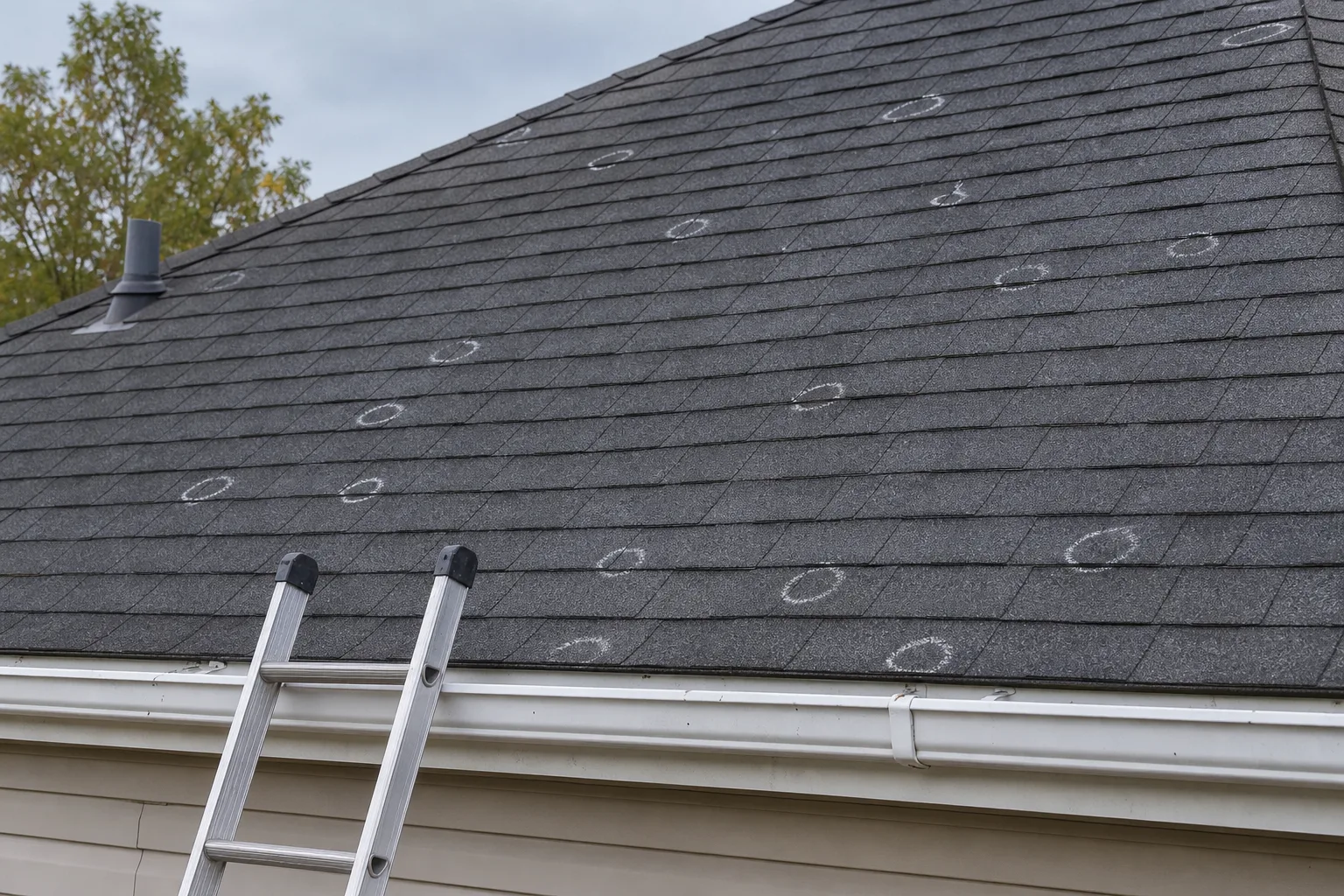
The morning after a hailstorm, your phone starts ringing. A roofer who was in the neighborhood. Then a second one. Then a letter offering a free inspection. Meanwhile your carrier has opened a claim number and scheduled a field adjuster for sometime next week. Three parties are now interested in your roof, and a first-time claimant usually assumes they are all measuring the same thing. They are not. They are answering different questions, on behalf of different people, and the gap between their numbers is where the entire decision lives.
The first question is whether this is a claim at all
Before you compare inspectors, compare the damage to your deductible. Many policies in hail and wind states carry a separate windstorm or hail deductible written as a percentage of the dwelling coverage rather than a flat dollar figure. On a house insured for $400,000, a 2 percent wind deductible is $8,000. A policy with a $1,000 all-peril deductible and a 2 percent wind deductible is two different policies depending on what hit you.
Find that number before you file. It sits on the declarations page, usually in the first half page, and it decides whether a damaged ridge vent and forty torn shingles are worth a claim or worth a check from your own account. A claim that closes below the deductible still exists in your loss history. That is not a reason to skip a real loss, but it is a reason not to file reflexively for a $2,400 repair against an $8,000 deductible.
One more sorting step. Wind and hail come from your homeowners policy. Rising water does not. Flood is a separate product, administered through the National Flood Insurance Program under FEMA, and if water entered from the ground up rather than through the roof, you are in a different system with different deadlines. Sorting the peril correctly in the first week saves weeks later.
Three inspections, three jobs
| Who | Works for | What they produce | What to watch |
|---|---|---|---|
| Carrier field adjuster | Your insurer | A scope and estimate, usually in standardized estimating software, that becomes the claim's baseline | How many slopes were measured, whether interior damage was scoped, whether code upgrades appear |
| Roofing contractor | Themselves, then you | A repair or replacement proposal, often with photos of hail strikes and lifted shingles | Whether the price reflects what the work costs or what they expect insurance to pay |
| Public adjuster | You, for a percentage of the settlement | An independent scope and a claim they manage on your behalf | License status, the fee percentage, and whether the claim is large enough to justify it |
A first-timer's instinct is to decide which one is honest. That is the wrong frame. The carrier adjuster is producing a defensible number under their employer's guidelines. The contractor is producing a number that wins the job. The public adjuster is producing a number they will be paid a share of. None of that makes any of them wrong. It means you read each document for what it covers, not for whose tone you liked.
The practical move is simple and most people skip it: get the carrier's estimate as a line-item document, not a summary letter, and lay it next to the contractor's proposal. Differences will show up as missing lines, not as disputed opinions. Drip edge. Ice and water shield. Two layers of tear-off instead of one. Those are checkable facts about your house.
What the policy pays, and the clause that changes the number
Two policies can both say they cover hail and still settle a destroyed roof very differently.
- Replacement cost versus actual cash value. Actual cash value subtracts depreciation for the age of the roof. A fifteen-year-old architectural shingle roof on an ACV settlement pays a fraction of the replacement figure. Some policies apply ACV to the roof specifically through a roof surfacing endorsement while the rest of the house stays on replacement cost.
- Cosmetic damage exclusions. Increasingly common on metal roofs and siding. Hail dents that do not affect function may be excluded by name.
- Ordinance or law coverage. If current code requires a full deck replacement or an added underlayment that the original roof did not have, this is the coverage that pays for the upgrade. Without it, the gap is yours.
- Matching. When a discontinued shingle or siding profile cannot be matched, state regulations and policy language vary on how far the repair must extend. Ask directly rather than assuming.
Read these four before the adjuster arrives. You will then be able to hear the difference between a number you disagree with and a number your own policy produced correctly.
If the first number is low, there is a sequence
Disputes get resolved far more often by process than by argument. The order that works: request the full line-item estimate, then submit a supplement with your contractor's documentation for the specific items missing, then request a reinspection with your contractor present so both parties are on the roof at once. Most disagreements die right there, because they were scope gaps rather than coverage denials.
If coverage itself is the issue, look for the appraisal clause in the policy. It lets each side name an appraiser, with a neutral umpire breaking ties, and it resolves the amount of loss without litigation. It does not resolve whether a peril is covered. Knowing which of those two fights you are in is the single most useful piece of judgment a first-time claimant can develop.
Photograph the roof and the elevations on a clear day this month, while nothing is wrong. Save the declarations page somewhere you can find it in a hurry. When the next storm comes through, you will be the homeowner who knows what the policy says before anyone else arrives to tell you.
Tobias Renfrew
Tobias covers complaints, claims, and the paths open once something has gone wrong.