Motoring
The Severe Service Column Was Written for Ordinary Suburban Driving, Not for Taxis
Owner’s manuals carry two maintenance schedules, and shops get accused of pushing the expensive one. The awkward part is that most driving genuinely qualifies for it.
- Words
- 1,131
- Written by
- Alma Sandoval
- Filed
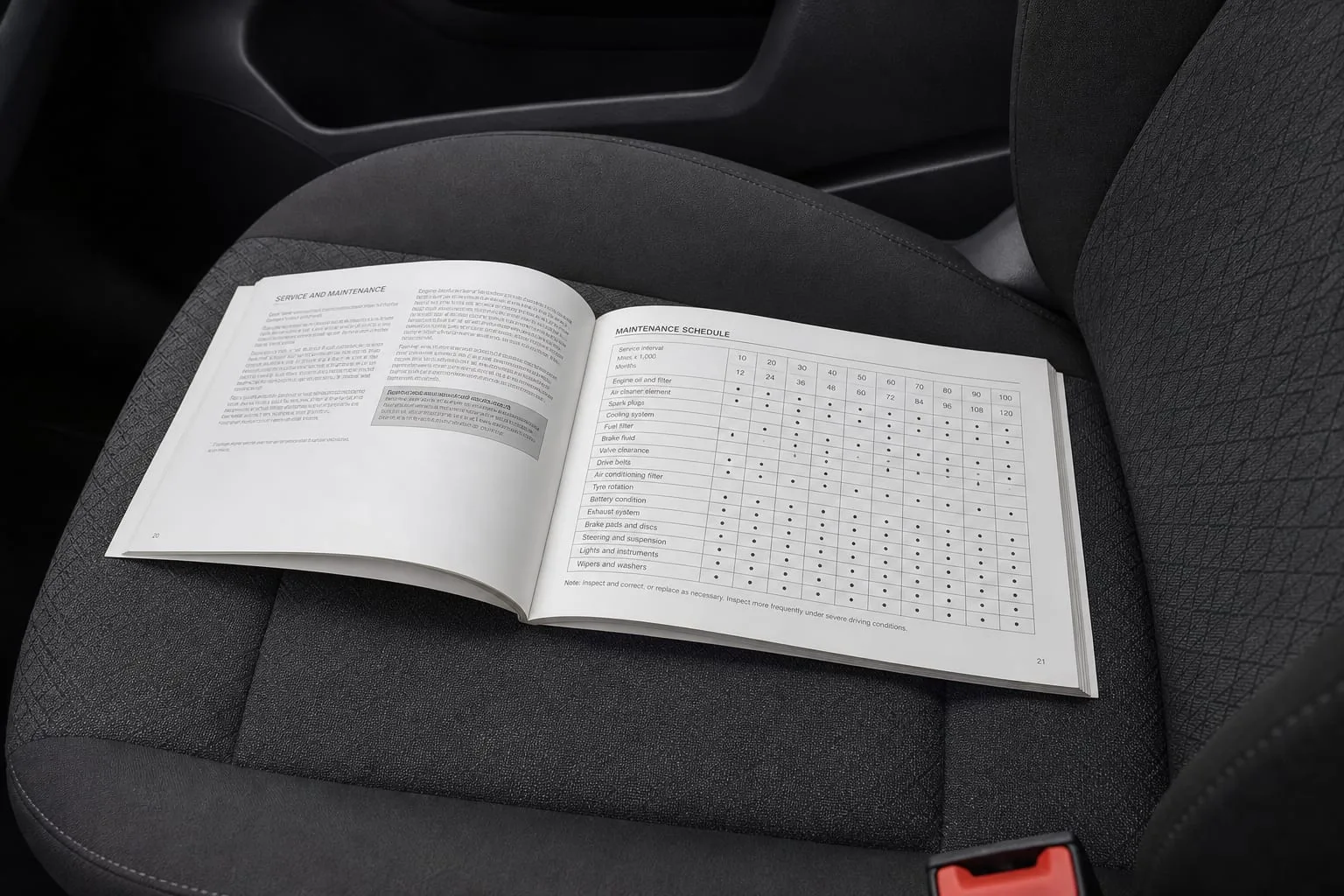
Open the maintenance section of almost any owner's manual and two columns are printed side by side. One is headed normal and the other severe, or special operating conditions, or something to that effect, and the second column asks for more frequent attention on several items. Most drivers glance at it and assume it was written for taxis and tow trucks, which is a reasonable assumption and not what the manufacturer meant. Comparing the definition against how you actually drive takes about ten minutes and settles the question without anybody having to trust a service advisor.
What the Manufacturer Means by Severe
The definitions vary between makes and overlap heavily. The conditions listed almost always include frequent short trips, commonly defined as under five or ten miles and particularly in cold weather, along with extensive idling or stop and go traffic and driving in dusty conditions including gravel roads. Towing or carrying heavy loads, running a roof rack, sustained heat or cold, mountainous terrain, and extended periods where the vehicle simply sits unused all appear as well.
Read that list against a typical suburban week: a three mile drive to school, a stop and go commute, a car that sits all weekend, and winter mornings where the engine never reaches full operating temperature before it is switched off again. That pattern satisfies three of the listed conditions and describes the most common driving in the country. The counterintuitive part is that the gentle sounding life is the harder one, since a car driven forty steady miles a day is operating exactly as the normal schedule assumes and a car driven four miles twice a day is not.
Why Short Trips Are Harder on an Engine Than Long Ones
An engine that never reaches operating temperature does not fully evaporate the moisture and unburned fuel that accumulate in the oil during combustion. Both are contaminants, both dilute the oil's ability to protect the surfaces it is there to protect, and both leave only with heat that a three mile trip never produces. Nothing about that is marketing. It is the reason the severe column exists at all, and it predates any service department's revenue targets by several decades of engineering practice.
The same logic runs through the rest of the vehicle. The exhaust system corrodes from the inside when condensation is never driven off, which is why short trip cars lose mufflers earlier than mileage alone would predict. The battery is asked to deliver a large starting current and is then not given long enough at charging voltage to recover it, so a car used only for errands ages its battery faster than one covering three times the distance. None of these failures announces its cause, which is why the pattern goes unrecognized.
What Actually Differs Between the Two Columns
Here is where the sales pressure and the engineering separate, because the severe schedule changes fewer items than most people assume. Engine oil and filter differ meaningfully, since contamination from short trips and idling is the entire reason the column exists. The engine air filter differs in dusty conditions and the cabin filter differs for the same reason and costs very little. Transmission fluid differs for towing and heavy loads, because heat degrades it and load generates heat.
Several items do not differ at all. Brake fluid is usually time based in both columns, since it absorbs moisture regardless of how the car is driven. Spark plugs are generally mileage based and largely unaffected by trip length. Coolant is typically the same in both, on a long interval driven by chemistry. So a service advisor recommending severe intervals on oil, filters and transmission fluid is following the manufacturer, while one recommending everything in the book at severe intervals, including items the manual treats identically, is doing something other than following the book.
How the Intervals Got Longer, and What Did Not
Anybody who learned to service cars a few decades ago carries a number in their head that is no longer correct, because oil change intervals have extended substantially on the back of better base oils, synthetics, tighter tolerances and improved filtration. A modern engine running full synthetic to the manufacturer's normal interval is not being neglected, and a shop still quoting the old figure to every customer is working from habit or from margin rather than from the manual sitting in the glovebox.
Three things did not extend alongside it and are now the ones most often missed. Brake fluid absorbs moisture through the system's flexible components on a calendar rather than an odometer, so a car driven very little still needs it changed on time. Coolant has a service life tied to its chemistry, and the long life formulations that made intervals longer are the same ones ruined by topping up with the wrong type. Sealed transmission fluid described as filled for life usually means the life of the warranty. Disposal of all three is regulated, which is why the Environmental Protection Agency sits behind the small disposal line at the bottom of every invoice.
The Oil Life Monitor, Which Settles Most of the Argument
Most modern vehicles calculate remaining oil life from engine conditions rather than from miles traveled, and that calculation already accounts for short trips, idling and ambient temperature. If your car has one and you are willing to trust it, the monitor is effectively performing this entire assessment continuously on your behalf, and following it is a defensible position that also ends the conversation at the counter, since the number came from the manufacturer rather than from either party in the discussion.
What to Say at the Service Desk
Two questions turn a vague upsell into a specific conversation. Which schedule are you quoting from, normal or severe? And is this item actually different between the two columns in the manual? A shop that answers both directly is quoting from the book. If the answer to the second is that the item is identical in both columns, ask what specifically about this vehicle prompted the recommendation. There is a legitimate answer available, since a technician who has seen dirty fluid is not working from a schedule at all.
Keep the invoices in one place with the mileage written on them, since a vehicle with a documented history is worth more when it sells and the file is also what tells you whether you have been following either schedule or drifting between the two. Most owners asked when they last changed the transmission fluid do not know, and that gap is what the severe column argument is really about. The two columns are not a sales device. They are a description of two different lives a car can have, and most cars are living the second one.
Alma Sandoval
Alma writes about the parts of a deal that are still open.