Health
Seeing a Practitioner Across State Lines? What a License Covers Now That the Waivers Are Gone
Emergency cross-state waivers have lapsed and licensure compacts took their place. Here is what a credential actually certifies, and the ten-minute check that confirms it.
- Words
- 1,016
- Written by
- Grant Weatherby
- Filed
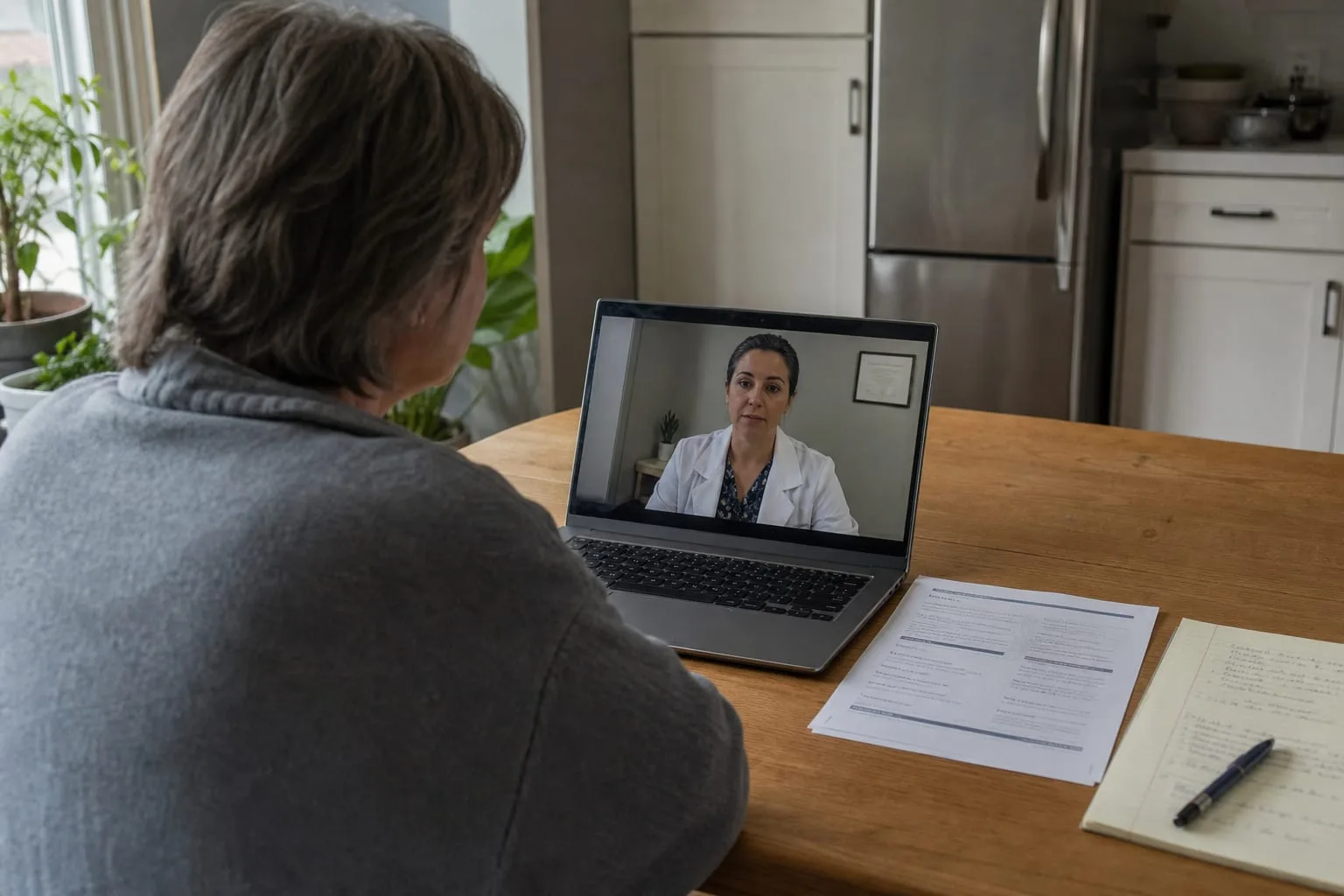
The therapist you started seeing over video in 2021 may now be licensed in a state you no longer live in, and that is not a technicality. During the public health emergency, most states suspended the ordinary rule that a practitioner must hold a license in the state where the patient is physically sitting. Those suspensions have expired. What replaced them is a patchwork of interstate compacts, registration pathways, and a handful of states that simply went back to the old rule. If you are choosing a clinic or a clinician right now, the credential on the website is answering a narrower question than most people assume.
What actually changed, and why
Licensing in the health professions has always been a state function. A license issued in Ohio is permission from Ohio, granted under Ohio's statutes, enforced by an Ohio board. The emergency waivers did not change that logic. They temporarily excused practitioners from it, on the theory that access mattered more than jurisdiction during a crisis.
When the waivers wound down, states faced a practical problem they had been circling for years: telehealth had made the geography of a license feel arbitrary to patients while remaining central to enforcement. The answer has been compacts. Physicians have the Interstate Medical Licensure Compact. Nurses have the Nurse Licensure Compact. Psychologists practice across member states through PSYPACT. Counselors, physical therapists, occupational therapists, and social workers each have compacts at various stages of enactment and implementation, which is the crucial distinction. A state legislature passing a compact bill does not mean a practitioner can use it yet. The commission that administers it has to stand up operations first, and several are still doing that.
The result is that two clinicians with identical training can have different reach. One holds a compact privilege that covers you where you sit. The other holds a single-state license and would need to be licensed in your state, or see you when you travel back. Neither is a comment on competence. It is a comment on paperwork, and it is worth confirming before you invest months in a treatment relationship.
What a license guarantees
A license is a floor, and it is a real one. To hold it, someone completed an approved education program, passed a standardized examination, documented supervised hours where the profession requires them, cleared a background check, and agreed to be answerable to a board with subpoena power. The board can restrict, suspend, or revoke. It can order monitoring. It publishes actions. That accountability is the substantive product a license delivers, and it is the reason state boards, rather than voluntary bodies, hold the power to stop someone from working.
A license also defines scope of practice: what this professional may legally do, prescribe, order, or sign. Scope is set state by state, so the same credential can carry different authority in two neighboring states. Nurse practitioner autonomy is the clearest example, but it appears in imaging, anesthesia, and behavioral health too.
What a license does not do is rank anyone. It certifies entry-level minimum competence at the moment of issue, plus whatever continuing education the state requires to renew. It says nothing about volume, outcomes, subspecialty depth, or whether this person has treated your particular condition ten times or once.
License, certification, and membership are three different things
These get printed in the same font on the same page, and they are not equivalent.
- License. Issued by a state. Legally required to practice. Enforceable.
- Board certification. Issued by a private specialty board. Voluntary, usually rigorous, generally requires periodic recertification. It signals depth in a specialty that a license does not address.
- Certificates and memberships. Issued by associations, training institutes, and course providers. Quality ranges from serious multi-year credentialing to a weekend and a fee. The word "certified" is not protected in the way "physician" or "registered nurse" is.
The Federal Trade Commission is responsible for policing deceptive advertising claims made to consumers, which includes how services are described and credentialed in marketing. That backstop matters, but it works after the fact. The faster protection is knowing which of the three categories a given line on a bio belongs to before you book.
The ten-minute verification
Every state licensing board maintains a public lookup, and it is the only source that settles the question. Search for the board by profession and state, then check four things.
- Status and expiration. Active is the word you want. Lapsed, inactive, and probationary all mean something specific.
- Disciplinary history. Boards post actions and often the underlying orders. Read the order, not the summary line.
- The state you will physically be in. For telehealth, this is the state that governs the encounter. If the clinician is practicing under a compact privilege, that privilege is recorded and verifiable.
- The name on the license against the name on the schedule. Clinics staffed by supervised associates and residents are normal and often excellent. You should simply know who is treating you and who is supervising.
For specialty claims, check the certifying board's own directory rather than the practice website. Most maintain free searchable listings.
What to ask when the credential checks out
Once the license is confirmed, the useful questions move to experience and logistics. How often do you treat this condition? Who covers when you are away? If I move, or spend three months in another state, can our sessions continue legally, and under what mechanism? A clinician who answers the last one crisply has already thought about the compact question, which is a reasonable proxy for how they handle administrative detail generally.
Ask about billing and documentation in the same breath. Cross-state practice affects which insurer network applies and which state's privacy and records rules govern your file.
The waiver period taught patients to treat state lines as invisible, and the compacts are steadily making that closer to true for the professions that have built them. In the meantime, the license lookup is free, public, and current, and the five minutes it takes tells you more than any credential list assembled by the person you are checking.
Grant Weatherby
Grant writes about what has changed lately and what it means.