Homes
Replacing Windows? Four People Who Can Tell You What You'll Actually Save
Double glazing pays back in two different currencies, and the people best placed to tell you which one you'll get mostly don't work for the window company.
- Words
- 932
- Written by
- Alma Sandoval
- Filed
The pitch for double glazing almost always lands on a single number: the amount shaved off the heating bill. That number is the hardest part of the job to verify and the easiest part to promise. Meanwhile, the benefits most households actually notice week to week sit somewhere else entirely, and the people best positioned to describe them usually have no financial interest in the sale.
There are four of them. Talking to even two before you sign changes what you buy, what you pay, and which rooms you do it to first.
The savings arrive in two currencies, and only one shows up on a statement
The first currency is fuel. Less heat leaving the house in January, less cooled air leaking out in August. Real, but slow, and tangled up with weather, utility rates, how many people are home, and whether you replaced the furnace the same year. If you want to track it honestly, you need a full heating season of before-and-after usage, normalized for degree days, and most people never do that.
The second currency is the one that changes a Tuesday. The seat by the bay window stops being the seat nobody takes from November through March. The thermostat stops getting nudged up at five o'clock because one room runs cold. Condensation stops pooling on the sill and soaking the paint underneath. Street noise drops enough that the front bedroom becomes usable as an office. A room you had quietly written off comes back into rotation.
That second currency is where double glazing most reliably delivers, and it is worth saying plainly because it changes the math. If a cold room is driving you to overheat the whole house, comfort and fuel savings are the same thing. If the room is cold and nobody sits in it anyway, fixing the window buys you comfort you weren't using.
The energy auditor and the HVAC tech see the house you actually live in
A home energy auditor runs a blower door test and finds where air moves. Very often the answer is not the glass. It is the rim joist, the attic hatch, recessed lights, the gap where a pipe passes through the band board, or the original window frames rather than the panes inside them. An auditor who finds eight hundred dollars of air sealing that outperforms a twenty thousand dollar window order is doing you a service that the window company structurally cannot.
The HVAC contractor who sizes your equipment is the second one. When a tech runs a proper load calculation, window performance is an input. Ask what happens to the number if the windows change. Sometimes the answer is that better glazing lets the next system be smaller, which is money in a different year. Sometimes it is that the ductwork is the problem and no window will touch it. Either way you learn something before you commit, not after.
Both of these people are typically working off an hourly fee or a service call you were going to pay anyway. Their incentives point at the truth.
The rebate desk and the label on the glass
Utility rebate programs and state efficiency offices employ people whose job is to confirm that a product qualifies. They work from published performance criteria, not from a brochure. The Department of Energy is responsible for federal efficiency standards and the labeling framework that lets you compare one window to another on the same terms, which is why the sticker matters more than the sales language.
Two numbers carry most of the weight. U-factor describes how much heat passes through, lower being better. Solar heat gain coefficient describes how much sun energy comes in, and the right value depends on your climate and which direction the window faces. A south-facing window in a cold region and a west-facing window in a hot one want different glass. A company selling one package for the whole house is not wrong, exactly, but it is simplifying.
Call the rebate desk before you order. Ask which product categories qualify this program year, what documentation they need, and whether the installer has to be on a participating list. That last question has sunk more rebates than any other.
Where your leverage actually sits in the week
Leverage lives in a narrow window, and it closes the moment the deposit clears and the order goes to the factory. Custom glass is not restockable. Before that point, you can negotiate. After it, you are asking for favors.
Things that are reasonable to ask for while you still hold the pen:
- A phased order. Worst three windows this year, the rest next, with pricing held in writing.
- The itemized split between product, labor, and disposal, so you can compare two quotes that look nothing alike.
- Written confirmation of the U-factor and SHGC for each opening, not a house average.
- Who does the work. The crew lead on your job may be a subcontractor the salesperson has never met.
- A date range tied to a calendar, plus what happens if the glass arrives wrong.
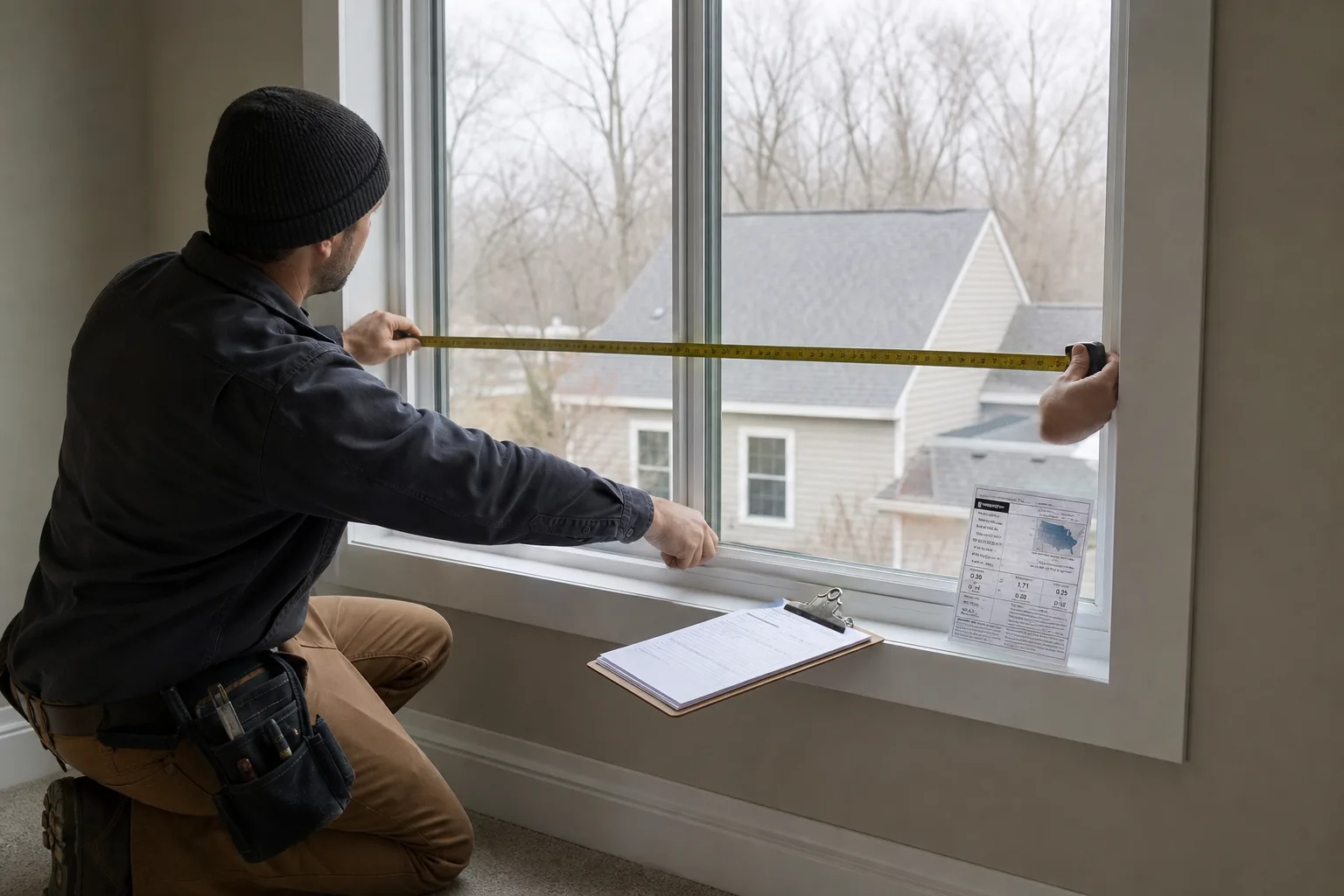
Installers have slow weeks, typically late winter and the shoulder of fall, and a crew that would otherwise sit idle is a crew with a reason to meet you on scheduling or price. A measure appointment is also a free second opinion: the tech holding the tape has seen a thousand frames and will often tell you which of yours are genuinely failing and which have another decade in them.
Ask that question out loud. The answer tends to be specific, and it costs nothing.
Alma Sandoval
Alma writes about the parts of a deal that are still open.