Homes
Picking a Roof Material? The Bills That Show Up Years After the Crew Leaves
Roofing materials are sold on price per square and a warranty number. The consequences arrive later, in insurance renewals, gutter work, attic heat and what a buyer's inspector writes down.
- Words
- 900
- Written by
- Alma Sandoval
- Filed
Estimators who have written a few thousand roofs stop talking about materials in terms of years. They talk about them in terms of what happens next: which insurer renews, whether the gutters need cleaning twice a year or four times, what the buyer's inspector writes in 2031, and whether adding solar means drilling through something forgiving or something that cracks. The shingle on the sample board is a decision about the next decade of small bills, and almost nobody traces those bills back to the afternoon they signed.
The consequences that never get connected to the roof
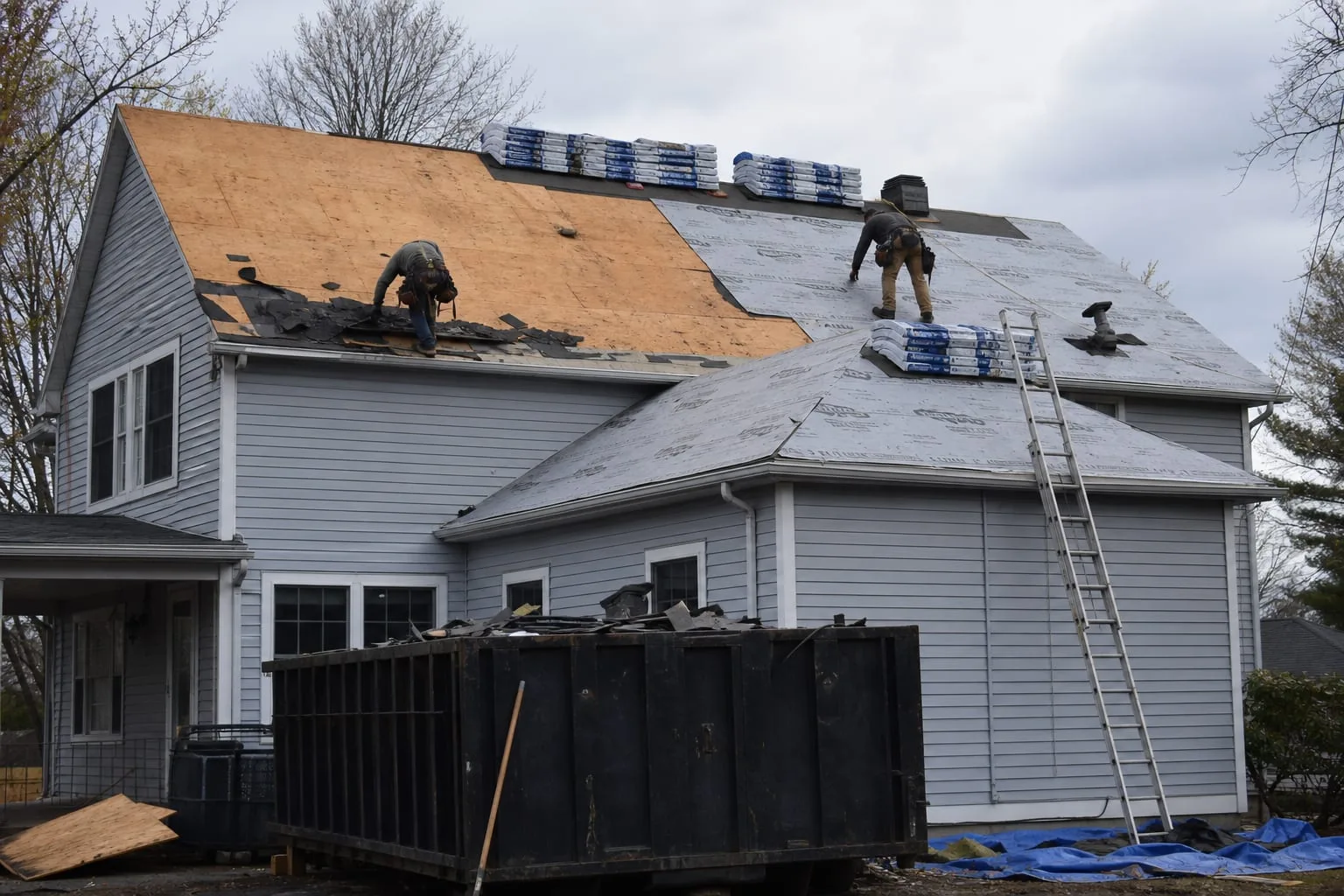
A homeowner calls in year six because the downspouts keep plugging. The material is fine, the roof is not leaking, and the granule loss is within normal range for a builder-grade three-tab that was already three years into its shelf life when it went on. Nobody links the quarterly gutter cleaning to the cheapest line on the original bid.
The same pattern shows up in other places. An attic that runs hot all summer because the bid included the shingles and skipped the intake ventilation. An ice dam every February in the same valley, because ice-and-water membrane was an upgrade line the homeowner declined. A renewal notice that arrives with a higher wind or hail deductible attached, because the carrier has a view about roof age that the homeowner has never read. The Department of Energy, which oversees federal work on building energy performance and reflective roofing, treats the roof as an energy system rather than a cosmetic layer, and that is closer to how the bills actually behave.
Rated life, achieved life, and the gap between them
Warranty length is a marketing number and a legal document, in that order. What matters is the achieved life on a roof like yours: your slope, your ventilation, your tree cover, your hail frequency, your installer. Two identical products on two identical houses can land a decade apart.
| Material | What drives the real number | What it costs you in between |
|---|---|---|
| Three-tab asphalt | Ventilation, heat load, storm exposure | Granule loss into gutters, earliest insurer scrutiny, shortest resale story |
| Architectural asphalt | Installation quality, nailing pattern, ridge and intake venting | Middle of the road on maintenance; the common baseline appraisers expect |
| Standing seam metal | Fastener and clip detailing, flashing at penetrations | Fewer service calls, noise and denting complaints, specialist needed for any later work |
| Concrete or clay tile | Underlayment life, not tile life; structural load | Underlayment replacement while tiles are reused; breakage from foot traffic |
| Slate | Fastener corrosion and deck condition | Very long service life, very short list of people who will touch it |
| Synthetic shake and slate | Product track record, which is shorter than the warranty | Weight and appearance benefits; replacement parts depend on the maker still existing |
An honest comparison names the thing under the surface. On tile, the roof's clock is the underlayment, not the tile, which is why a tile roof can be sold as lasting fifty years and still need a major job at twenty-five. On metal, the clock is usually the flashings and fasteners. On asphalt, it is heat and ventilation. Ask any bidder which component fails first on the assembly they are proposing. The ones who answer without hedging are the ones worth negotiating with.
What the material quietly decides for you
Some choices close doors you have not walked up to yet. Tile and slate carry weight that may require a structural review, and that review is cheaper to commission before the tear-off than during it. Metal changes who can add a solar array, run a new vent stack, or mount a satellite dish, and it changes what they charge. Painted metal and tile both have color and profile rules in many HOA and historic districts, which is worth checking before you fall for a sample.
Insurance is the consequence people trace back least often. Carriers increasingly price and underwrite around roof age, material and wind rating. A wind-rated, impact-rated product can matter at renewal in hail states, and the documentation that proves it lives in the paperwork your installer either keeps or does not. Ask for the product data sheets and the invoice for what was actually delivered, not what was quoted.
Where your leverage sits, and when it disappears
Your leverage is highest in the window between the second bid and the deposit, and it is gone the moment the dumpster arrives. Use it on the parts of the job that are easy to omit and expensive to retrofit.
- Intake and exhaust ventilation specified by count and location, not the phrase "as needed."
- Ice-and-water membrane in valleys, at eaves and around every penetration, written into the scope.
- New drip edge and new pipe boots, not reused ones.
- A per-sheet price for decking replacement agreed in writing before anyone opens the roof, so the discovery is not also a pricing negotiation.
- The workmanship warranty term and whether it transfers on sale, in the contract rather than the brochure.
Off-season scheduling is real leverage too. A crew filling a slow week has reasons to include the flashing package.
The homeowners who come out ahead are rarely the ones who bought the longest warranty. They are the ones who asked what the roof would demand of them in year four and year twelve, got the answer in writing, and paid for the parts of the assembly nobody sees from the driveway.
Alma Sandoval
Alma writes about the parts of a deal that are still open.