Homes
Is a Maintenance Membership Worth More Than the Two Visits It Contains?
Two tune-ups a year, a discount on repairs and priority scheduling, billed monthly. Whether it is worth having depends almost entirely on one line in the agreement.
- Words
- 916
- Written by
- Tobias Renfrew
- Filed
The pitch arrives the same way from every heating, plumbing and pest company in the phone book: a monthly amount, two scheduled visits a year, a percentage off any repair, no overtime charge, priority when something fails on a holiday weekend, and cancel any time. Some of these agreements are genuinely good value and some are a financing arrangement for visits the household would never have bought separately. The difference is legible in the paperwork rather than in the pitch, and it comes down almost entirely to what the scheduled visit actually contains.
Pricing the Two Visits Against What They Cost Separately
Price the components on their own before you price the bundle. A seasonal service call bought as a single item has a published price at most companies, so two of those a year is the baseline, and the membership fee multiplied by twelve should be set directly against it. If the annual cost lands at or below the price of two standalone visits, the discount and the priority are effectively free. The catch is that the two visits are not always the same visits, since a standalone call is usually a full inspection ending in a written report while a membership visit at a high volume company can be a shorter routine performed by a less experienced technician. Ask how long the visit is scheduled for, because forty five minutes and ninety minutes are different products.
The Discount, and Which Part of the Invoice It Comes Off
Members typically get somewhere between ten and twenty percent off repairs, and the number matters much less than which components of the invoice it applies to. A discount on labor with parts left at list price is a materially smaller benefit than a discount on the whole ticket, and both arrangements are common enough that assuming is a mistake. There is a second thing worth understanding without becoming cynical about it, which is that a maintenance visit is also, unavoidably, a sales visit, since the technician is standing in your basement looking at equipment and finding things is part of the job.
Priority Scheduling, Which Is the Line That Decides It
Priority is the benefit people join for and the one least often defined in writing. In a good agreement it is specific: members are seen within a stated number of hours, or ahead of non-members on the same day, and the company can tell you what that meant in practice during the last cold snap. In a weak one it says members receive priority service, which describes an intention rather than an obligation. Ask directly what happened the last time the temperature sat below freezing for three days, because a company that answers with a number is running a real program.
The same test applies to the no overtime charge clause, which is one of the more valuable inclusions if it genuinely covers evenings and weekends and worth very little if it excludes precisely the hours when equipment fails. Heating systems do not fail at two in the afternoon on a Wednesday. They fail on the first properly cold night of the year, which is when every company in the county is oversubscribed, and a clause that carves out that night has been written by somebody who understood the pattern perfectly well.
The Benefit Nobody Puts a Price On
The strongest argument for a membership has nothing to do with the arithmetic above. It is that the visits actually happen. Households that fully intend to book an annual service mostly do not get around to it, and equipment nobody has looked at fails on the coldest night rather than on a mild Tuesday in September when a technician could arrive within the hour. A subscription converts an intention into a scheduled appointment, and for a great many households that conversion is the real product being sold.
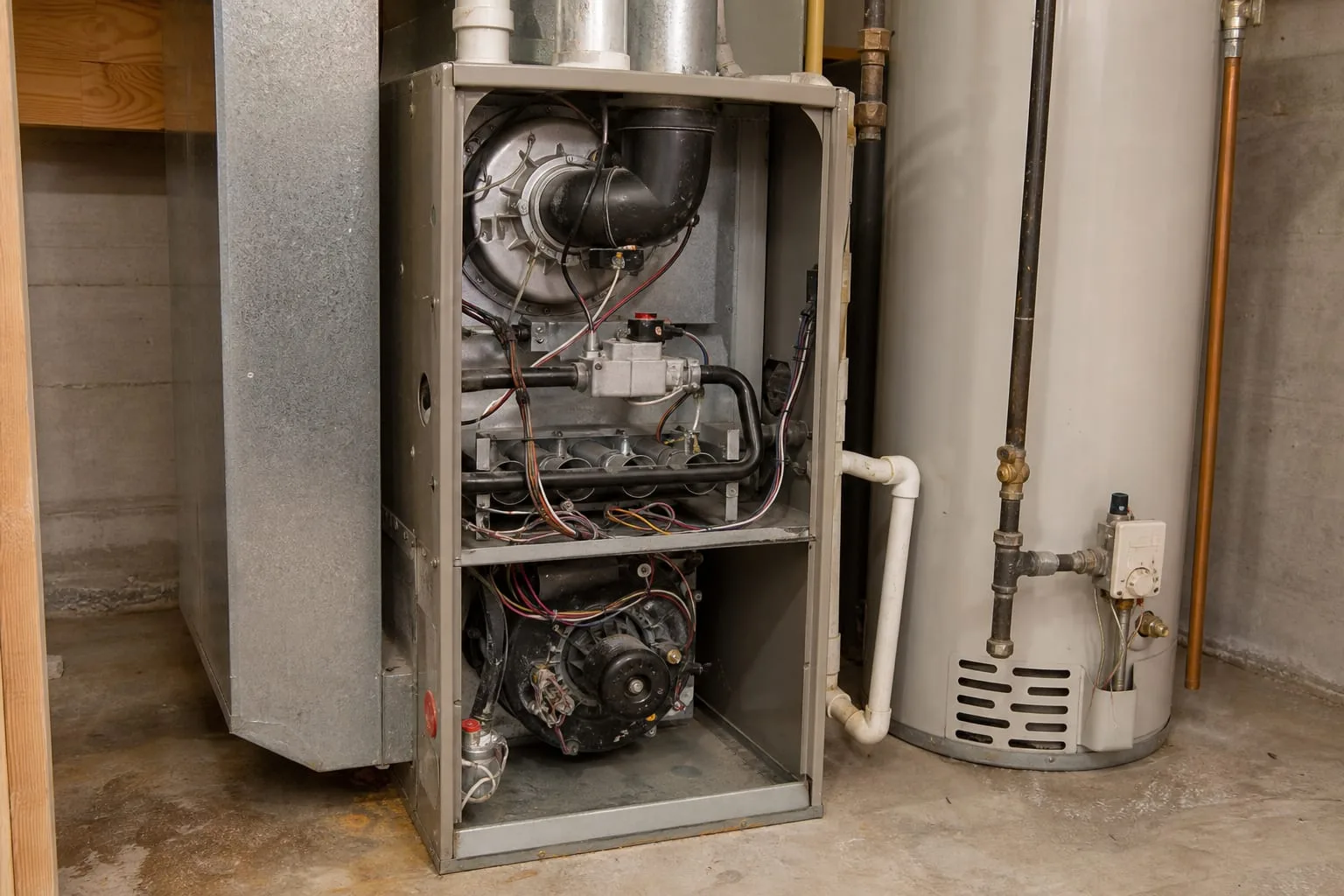
The tasks themselves are unglamorous and well established: filters changed, a condensate line flushed, a flue checked, a burner cleaned. None of it is novel, and the same short list turns up in the residential efficiency material the Department of Energy puts out for homeowners, largely unchanged for years, because the physics has not moved. What a plan buys is compliance with your own maintenance plan, which is a strange thing to pay for and a reasonable one, given how reliably good intentions lose to a busy September.
Three Questions That Settle It in One Conversation
How long is the visit and what is on the checklist, in writing. What exactly does the repair discount come off, parts included or labor only. And what is the term, because plans that bill monthly while committing you for twelve months sit alongside genuinely cancellable ones and the difference is a single sentence most people never read. Ask those three and the answer usually becomes obvious before the conversation ends, without anybody having to be adversarial about it.
A company that has the checklist to hand, prices a standalone visit transparently and defines priority in hours is offering something worth having, and the monthly billing is a convenience rather than the point. One that cannot describe what happens during the visit is selling the subscription rather than the service, and the better answer for that household is a single thorough inspection each fall with the reminder sitting in your own calendar. The plan is only ever worth the visits inside it, which is why the visits are the thing to ask about first.
Tobias Renfrew
Tobias covers complaints, claims, and the paths open once something has gone wrong.