Digital
Phone Gone With Your Codes On It? The Order That Gets You Back In
The device that proves who you are is gone, and every recovery route asks you to prove who you are. There is a way through it, and the order matters.
- Words
- 823
- Written by
- Tobias Renfrew
- Filed
Two-factor authentication works because the second factor is something only you have, which is an elegant arrangement right up until the thing only you have is in the back of a taxi somewhere between the restaurant and home. At that point the property protecting your accounts becomes the property locking you out of them, and every recovery route available asks you to prove who you are using a device you no longer possess. It is recoverable in nearly every case, and what makes it slow is doing it in the wrong order.
The First Hour, in Three Moves
Lock or wipe the device remotely first, since both major phone platforms let you locate, lock and erase a handset from another device or a browser, and everything that follows assumes the phone is not currently being used by somebody else. Then call the carrier and suspend the mobile line, which matters more than people expect, because a SIM in another person's hands receives your text messages and text messages remain a recovery factor at a surprising number of services.
Then change the password on your primary email account, because email is the master key and every reset link in your life is delivered there. Securing it is what makes the rest of the recovery possible rather than merely desirable, and doing it third rather than first is a deliberate ordering. There is no point protecting the mailbox while an unlocked phone with a live SIM sits in a stranger's pocket receiving the confirmation codes for whatever you just changed.
Then Work Down in Order of Consequence
Email first, always, ahead of banking and ahead of anything social, because whoever controls the mailbox can eventually reach everything else. If you have recovery codes, this is the moment they exist for: one of those single use strings gets you into the account, at which point the lost device can be removed as an authentication method and a new one added. Without them you are into the account recovery process, which is slow by design, since a recovery fast enough to be convenient would be fast enough to be abused.
Expect identity verification questions, a waiting period measured in days at some services, and notifications sent to whichever other contact methods are on file, none of which can be hurried by explaining that you are in a hurry. Once email is back, work down in order of consequence: banking and anything holding money, then any account able to authorize a payment, then everything else, which can genuinely wait a week. Starting with whichever account you happened to need on Tuesday morning is the instinct, and it is the reason this takes people a fortnight.
Where Authenticator Apps Differ
The code generators are not interchangeable and the difference decides how bad this week is. An app that backs its seeds up to your cloud account restores everything onto a new handset the moment you sign in, which is the common arrangement now and turns a serious problem into a twenty minute one. An app storing seeds only on the device with no backup means every account has to be recovered individually, which is more secure against a stolen phone and considerably worse on the far more common day when one is simply lost.
The SIM Swap Problem, Running in Reverse
Text message authentication is widely criticized because a determined attacker can persuade a carrier to move your number onto their own SIM, which is a real risk and the reason authenticator apps are preferred by anybody who thinks about it. The same mechanism is why suspending the line matters so much here, since a lost phone plus a live line is a working second factor sitting in somebody else's pocket. Most carriers offer a port-out PIN or a number lock, and setting one takes a few minutes on an ordinary day.
Setting Up So It Does Not Happen Twice
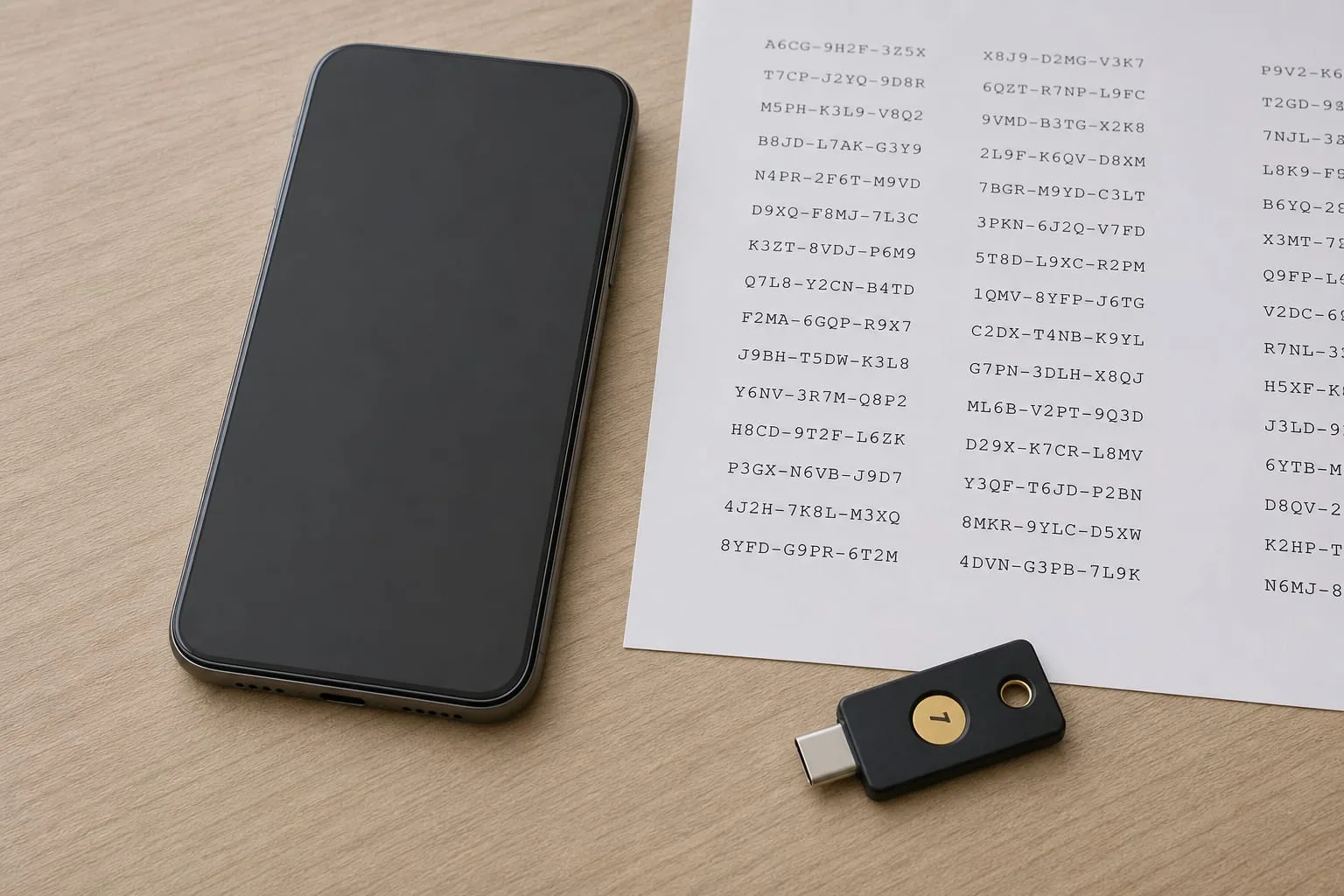
Print the recovery codes for your important accounts and keep them with the passport and the birth certificate rather than inside the password manager, because a manager sitting behind the lost factor is a circle with no way in. Register a second factor on a second device, whether that is a tablet, a laptop or a hardware key kept at home, since most services allow more than one and having two converts a lost phone from an event into an inconvenience.
Then check that your recovery contact details are current, because old email addresses and dead phone numbers sit in account settings for years and those are exactly the routes a recovery process will try. Ten minutes across your five most important accounts covers it. Any one of those three turns a lost phone from a bad week into an afternoon, all three together take under an hour, and the only time anybody has the patience for the work is a quiet evening when nothing whatsoever has gone wrong.
Tobias Renfrew
Tobias covers complaints, claims, and the paths open once something has gone wrong.