Homes
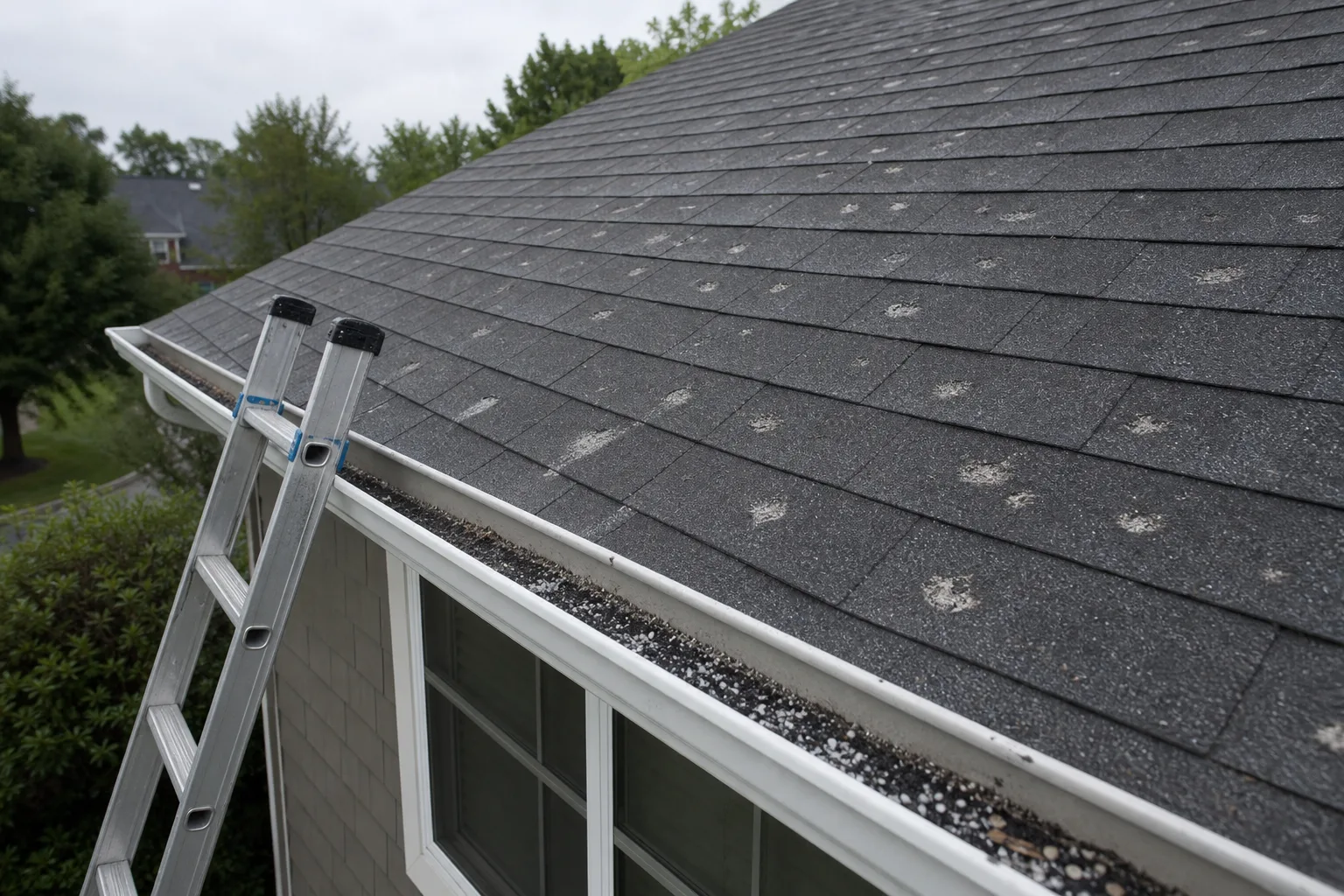
Hail Took the North Slope. What the Repair Actually Costs and Who Pays Which Part
Storm repairs are priced in squares, pitch and access, and paid out through a deductible formula most homeowners have never read. Here is how the two numbers meet.
- Words
- 1,035
- Written by
- Tobias Renfrew
- Filed
The estimate a roofer hands you after a hailstorm and the estimate your insurer writes are built from the same raw materials and almost never match. That gap is where most household disputes live. It is not usually fraud on either side. It is two documents measuring different things: one prices the job a contractor is willing to do, the other prices what the policy agreed to pay. Understanding what sits inside each number is the difference between a repair that costs you a deductible and one that costs you several thousand dollars you did not plan for.
What the roof estimate is actually made of
Roofing is priced by the square, meaning 100 square feet of roof surface. A modest single-story ranch might be twenty squares. A two-story house with dormers, valleys and a detached garage can run well past thirty. The square count is the base, and everything else is a multiplier applied to it.
The multipliers that move the number most:
- Pitch. Anything steeper than roughly 7/12 requires staging, harnesses and slower work. Steep charges are billed per square on top of the base rate.
- Stories and access. A second story adds height charges. A house wedged against a slope or a fence line where the dump trailer cannot reach adds labor for hauling.
- Layers. Tearing off two layers of shingles instead of one roughly doubles the tear-off and disposal line.
- Decking. Nobody knows how much rotten plywood is under the shingles until the old roof is off. Contracts usually price replacement decking per sheet, and that is the line most likely to surprise you mid-job.
- Material. Three-tab, architectural, impact-rated, metal and tile span a wide range. Insurers pay to restore what you had, not to upgrade.
- The parts that are not the roof. Gutters, downspouts, drip edge, flashing, ridge vent, pipe boots, window screens, siding on the storm-facing elevation, and the detached shed. Hail rarely hits only shingles.
A practical consequence: two houses on the same street with identical shingle damage can carry estimates thousands of dollars apart because one has a walkable roof and one does not.
The deductible is often a percentage, not a dollar figure
Most homeowners can recite their deductible. Fewer know they may have a second one. In hail and hurricane states, policies commonly carry a separate wind and hail deductible set as a percentage of the dwelling coverage limit, not of the loss. On a house insured for $400,000, a 2 percent wind and hail deductible is $8,000 before anything is paid, even if your all-other-perils deductible is $1,000.
That single line decides whether a claim is worth filing. A partial slope repair priced at $6,000 on that policy pays nothing. A full replacement with gutters, siding and code items at $28,000 pays a great deal. Find the declarations page, look for a separate windstorm or hail line, and do the arithmetic before you call anyone. It is the single most useful five minutes in the whole process.
Hurricane deductibles behave the same way but are triggered by a named storm, and the trigger language varies by state. Coastal policies sometimes tie it to a National Weather Service declaration and a specific wind speed. Read the trigger, not the summary.
Depreciation, and why the first check looks small
Replacement cost policies pay in two parts. The first check is actual cash value: the full repair cost minus the deductible minus depreciation for the age and remaining life of the roof. On a fifteen-year-old shingle roof, depreciation can be a substantial share of the estimate. The remainder, the recoverable depreciation, is released after the work is completed and you submit the final invoice.
So the cash you hold on day one is not the budget for the job. It is a down payment. Contractors who understand storm work price around this and bill the supplement to the carrier directly. Contractors who do not will ask you for the difference in cash, which is money the policy was going to pay anyway once the work was done.
If the policy is actual cash value only, usually on older roofs or in exchange for a lower premium, there is no second check. That is worth knowing at renewal rather than after a storm.
Code upgrades, supplements, and the flood line
Current building codes frequently require items that were not on the roof being torn off: ice and water shield at the eaves, synthetic underlayment, upgraded fasteners, new decking thickness, drip edge. These are real costs and they are paid under ordinance or law coverage, which is typically a percentage of the dwelling limit and is often capped. Check whether you carry it and at what percentage.
The other common adjustment is the supplement: a written request to the carrier for items the first estimate missed, supported by photographs and code citations. Detached structures, interior water staining, and HVAC fins flattened by hail all tend to show up this way. Supplements are routine and expected, not adversarial.
One boundary matters more than any other. Wind-driven rain entering through a storm-opened roof is generally a covered homeowners loss. Rising water is not, and flood coverage runs through a separate policy under the National Flood Insurance Program, which the Federal Emergency Management Agency administers. Households in wind and surge territory need both, and the distinction is decided by how the water reached the house.
The sequence that keeps costs where they belong
Photograph the roof and the ground-level damage before any tarping. Keep receipts for emergency measures, which are reimbursable. Get one independent estimate on a line-item basis so you can compare it against the adjuster's document line by line rather than total to total. Ask the contractor to attend the adjuster's inspection. Two people on the roof at the same time settle disagreements about slope counts and hit density on the spot, which is far cheaper than settling them in writing six weeks later.
The households that end up paying only their deductible are rarely the ones who argued hardest. They are the ones who knew the deductible formula before the storm, documented the damage in the first day, and made sure the two estimates were describing the same roof.
Tobias Renfrew
Tobias covers complaints, claims, and the paths open once something has gone wrong.