Homes
The Garden Bill You Get in Year Two, and How to Price It Before You Plant
Most landscaping quotes price the build and stay silent on the upkeep. Here is how to work out the recurring number yourself, before the design is locked in.
- Words
- 1,095
- Written by
- Grant Weatherby
- Filed
The install quote is a single number with an end date. The upkeep is a different animal: it arrives in small pieces, monthly or seasonally, and it does not stop. Homeowners who have been through a full planting cycle tend to describe the same surprise. Not the price of the build. The price of the second year, when the plant warranty has lapsed, the irrigation is running on a real schedule, and the crew that came twice in the first summer to "establish" things is now on a standing visit.
None of that is hidden, exactly. It is just priced separately, or not priced at all, and most of it is set by decisions made on a sketch before anyone digs. The useful move is to work out the keep-it number while the design is still a conversation.
The design decides the recurring bill, not the plant list
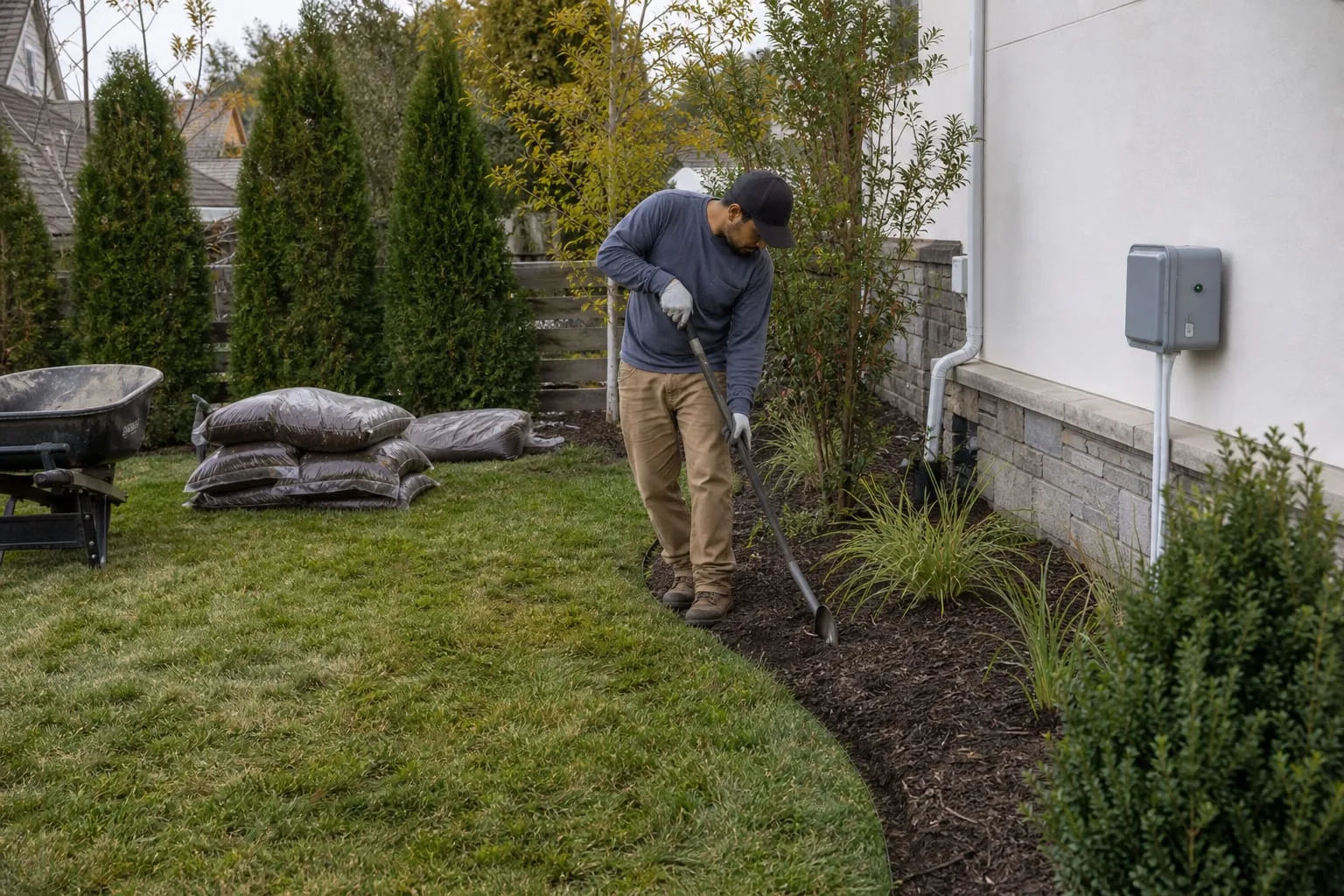
Ask a landscape contractor what drives annual cost and you will hear about edges, transitions and access. Not species. A bed with a clean hard edge against turf takes minutes to maintain. The same bed with a soft, hand-cut edge is a recurring labor line every visit, forever. A lawn broken into four irregular shapes around planters takes noticeably longer to mow than one rectangle of the same square footage, because the crew spends the time turning, trimming and blowing rather than cutting.
Slope is the other quiet multiplier. Anything a mower cannot safely climb gets cut by hand or converted to planting, and hand work is billed by the hour. Narrow side yards that a wheelbarrow cannot pass mean material gets carried by bucket. You will not see "no wheelbarrow access" on an invoice. You will see a higher hourly total and a crew that stays longer than you expected.
Trace the consequences people rarely connect back to the plan:
- Gravel next to a lawn means gravel in the lawn, and eventually a raking line or a mower blade.
- Deciduous trees over a pool, gutter run or artificial turf convert into a fall cleanup contract.
- Fast-growing privacy hedges are cheap to buy and expensive to hold, because they are a two- or three-times-a-year shearing job with debris to haul.
- Annual color beds are a purchase order twice a year. Nobody plants them once.
Those are all reasonable choices. They are just choices with a subscription attached, and you should know the size of it before you agree.
Water stopped being a flat cost
The change most households notice late is on the water bill. Tiered pricing has spread widely across municipal utilities: a base allocation at one rate, then higher rates as usage climbs, sometimes with a summer schedule that differs from winter. A new landscape can push a household from a comfortable low tier into a punitive upper one, and the increase shows up as a bill that looks wrong rather than as a line item labeled "garden."
The Environmental Protection Agency runs the WaterSense program, which sets the efficiency criteria for irrigation controllers and related equipment. It is worth knowing that a labeled weather-based controller exists as a category, because the difference between a timer that runs regardless and a controller that skips a cycle after rain is a real one on a tiered bill.
What to do before you sign, from the customer's side:
- Pull your last twelve months of water bills and find the tier thresholds. They are usually printed on the statement or on the utility's rate sheet.
- Ask the designer for the estimated peak-week irrigation demand of the plan, in gallons. A competent designer can produce this. If they cannot, that is information too.
- Ask what the same plan looks like with a third of the turf replaced by planting on drip. Get the water estimate for both.
You may still choose the lawn. But you will choose it knowing what it costs to run in August, which is a very different position from discovering it.
The line items that have moved recently
Several upkeep costs have shifted enough in the past few years to change how the math comes out.
Labor is the dominant share and it is priced by the hour, not the task. Maintenance crews have moved toward hourly or per-visit billing with a stated crew size, rather than a flat monthly figure for "the yard." That is more honest, and it also means a fussy design costs you directly and visibly.
Bulk material and disposal both rose. Mulch, compost and soil are a delivered commodity with a fuel component, and green waste disposal is charged by weight or volume at the transfer station. A design that generates a lot of clippings generates a lot of tipping fees. Ask whether haul-away is included or billed.
Plant warranties tightened. Many installers now offer a shorter replacement window than they used to, and condition it on the customer following a written watering schedule or maintaining an ongoing service agreement. Read the warranty as a document, not a reassurance. Note the length, the exclusions (drought, freeze, pests are common), and what proof of watering you are expected to have.
Irrigation service became its own visit. Spring startup, backflow testing where required, and fall shutdown are typically three separate charges. In cold climates the blowout is not optional.
How to build the keep-it number
You do not need a spreadsheet. You need one page, per plan, with six lines: routine visits (visits per year times the per-visit rate), seasonal work (pruning, cleanups, mulch refresh), irrigation service, water above your current baseline, replacement planting, and a materials allowance for the annual color or edging you have committed to.
Then take that annual figure to the person who will actually do the work. Get the maintenance contractor into the conversation before the design is final, and ask them to walk the plan and quote it as a standing job. They will tell you which two details are driving a third of the cost, and those details are usually cheap to change on paper and expensive to change in the ground.
Ask for the plan in two versions: the one you asked for, and the one the maintenance crew would build if they were paying the upkeep. The gap between them, priced, is the most useful document in the whole project.
The households that are happiest a few years in are rarely the ones who spent least on the install. They are the ones who knew, before the trucks arrived, what the standing monthly figure would be, and picked a garden that fit it.
Grant Weatherby
Grant writes about what has changed lately and what it means.