Homes
Why Do Two Dryer Vent Cleanings at the Same Price Produce Different Results?
Two services share a name and a price bracket. One removes lint from the first three feet. The other clears the whole run and can show you that it did.
- Words
- 858
- Written by
- Tobias Renfrew
- Filed
Two services are advertised under the same name at roughly the same price, and they take a technician about the same amount of time to sell over the phone. What happens afterward in the laundry room differs enough that they should not really share a name at all. The distinction is worth understanding before booking rather than after, because a restricted dryer duct is one of the more common causes of residential fire, and the part of the system that gets restricted is not the part anybody inspects.
What the Twenty Minute Version Consists Of
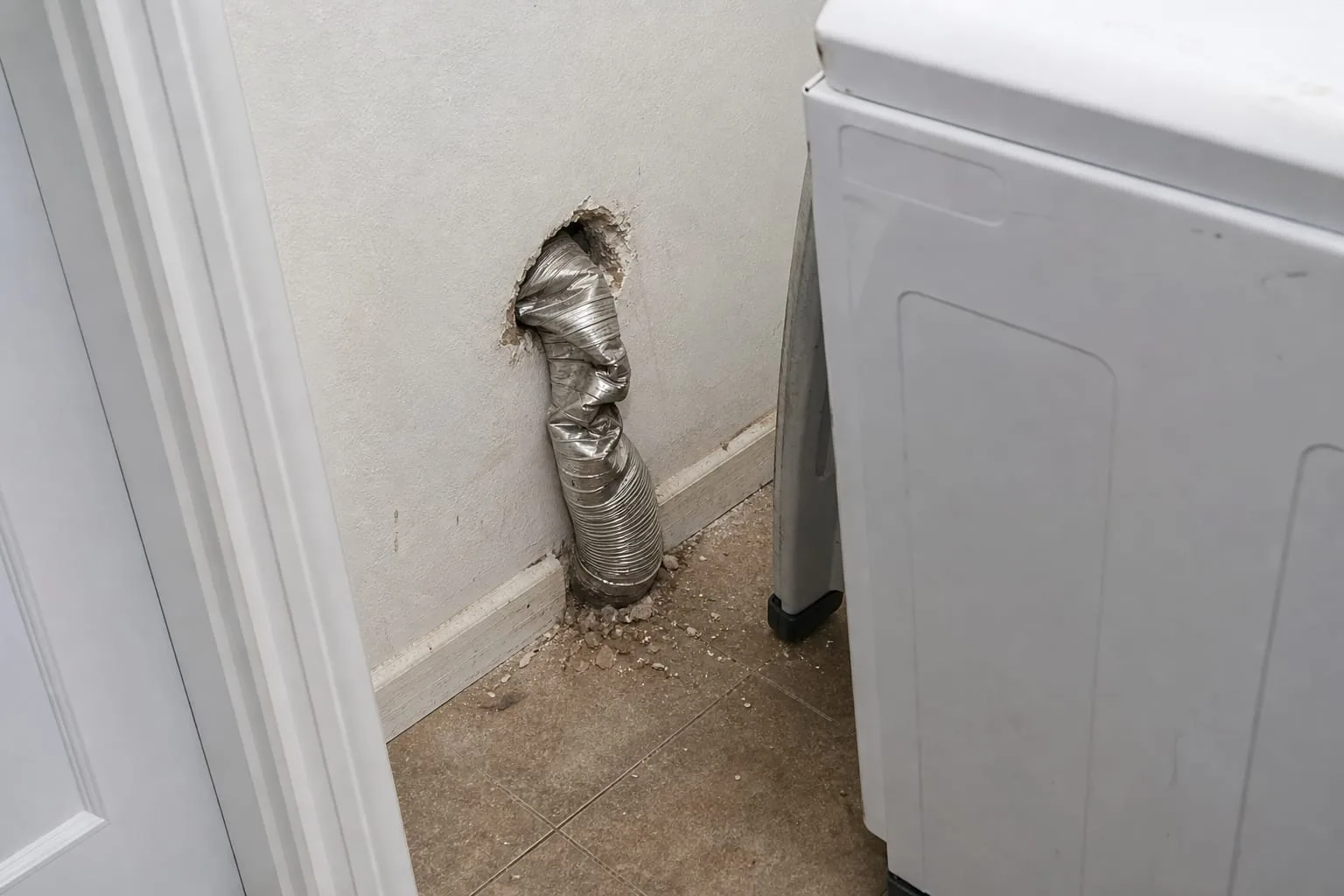
The technician arrives, pulls the dryer out, disconnects the flexible transition hose at the back, vacuums that hose and the first portion of the duct with a shop vacuum, clears the lint trap housing, reconnects everything and pushes the dryer back against the wall. Twenty minutes, start to finish. This is not worthless work, since the transition hose behind the appliance is where lint concentrates fastest, particularly if it is the ribbed foil type that should not have been installed in the first place, and clearing it does measurably improve things.
What it does not touch is the duct running through the wall, the floor or the attic out to the exterior. In a house where the dryer sits against an inside wall, that run can be twenty or thirty feet with several elbows in it, and every elbow is a place where lint gathers and stays. The blockage that actually matters is nearly always out there in the run, and a shop vacuum applied at one end of it reaches a few feet before it stops accomplishing anything at all.
What Brushing the Whole Run Involves
The thorough version uses a rotating brush on flexible rods driven by a drill, fed the entire length of the duct while a vacuum captures whatever comes loose along the way. Three details separate the people who do this properly from those who own the equipment. They work from both ends where access allows, because pushing debris the whole way in one direction can pack it against an elbow rather than remove it, which converts a partial restriction into a complete one.
They also check and clean the exterior termination, including the damper flap, where bird nests and seized flaps cause more restriction than lint ever does. And they measure something afterward, which is the detail worth asking about before booking. Airflow at the exterior vent, or a static pressure reading, gives a before and after number that demonstrates the job worked, and the same reading exposes a duct restricted by something no brush can fix, such as a section crushed flat under a floor during a remodel years ago.
What a Good Technician Finds That Is Not Lint
Frequently the real problem was never cleanliness. Flexible foil or plastic transition hose, which most codes do not permit for this application and which traps lint in every ridge, should be rigid or semi rigid metal instead. A transition hose crushed flat because the dryer was pushed too hard against the wall is extremely common and restricts airflow more than years of accumulated lint would. Screws at the joints, pointing into the airstream, each collect lint until the duct closes around them, which is why joints should be sealed with foil tape rather than fastened.
Then there is the run that is simply too long for the appliance, or carries too many elbows, since manufacturers specify a maximum equivalent length and every ninety degree bend counts for several feet of it. A booster fan or a rerouted duct answers that, and no amount of cleaning substitutes. The appliance itself is built to a safety standard, and when a model turns out to have a fire problem it is the Consumer Product Safety Commission that announces the recall, but nothing in that arrangement covers the duct behind it, which belongs entirely to the homeowner.
How to Tell Your Own Run Is Restricted
The clothes are the instrument. A load that used to dry in one cycle now needs two. The top of the dryer is hot to the touch by the end of a load. The laundry room feels humid or smells faintly of hot lint while the machine runs. Very little air comes out of the exterior vent when you go outside and hold a hand near it mid cycle. Any two of those together is reason enough to book the job before the season changes, and once a year suits most households.
Booking It So You Get the Real Version
Three questions asked on the phone will separate the two services cleanly. Do you brush the full length of the duct, and how do you get access to it. Do you clean and check the exterior termination and the damper. Do you take an airflow reading before and after the work. A company answering all three without hesitation is selling the version worth paying for, and the price gap between it and the coupon version is smaller than most people assume, which is the part that makes the choice easy once the questions have been asked.
Tobias Renfrew
Tobias covers complaints, claims, and the paths open once something has gone wrong.